×
- Hello
- Login or Register
- Quick Links
- Live Chat
- Track Order
- Parts Availability
- RMA
- Help Center
- Contact Us
- Shop for
- Mazda Parts

My Garage
My Account
Cart
Genuine Mazda 929 EGR Valve
Emissions EGR Valve- Select Vehicle by Model
- Select Vehicle by VIN
Select Vehicle by Model
orMake
Model
Year
Select Vehicle by VIN
For the most accurate results, select vehicle by your VIN (Vehicle Identification Number).
4 EGR Valves found

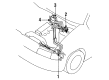
Mazda 929 Valve Part Number: FE65-18-741A
$96.83 MSRP: $129.12You Save: $32.29 (26%)Ships in 1-2 Business Days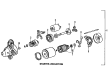
Mazda 929 Solenoid Valve Part Number: F285-18-741A
$98.79 MSRP: $131.74You Save: $32.95 (26%)Ships in 1-2 Business Days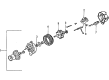
Mazda 929 Three Way Valve Part Number: FE70-18-741A
$100.44 MSRP: $133.95You Save: $33.51 (26%)Ships in 1-2 Business DaysMazda 929 EGR Valve Part Number: JE48-20-30Z-9U
Mazda 929 EGR Valve
Looking for EGR Valve with proven quality? Choose OEM EGR Valve. Mazda designs and builds them to strict factory specs. Every piece goes through rigorous quality checks. You'll get parts that fit right and work like new. Shop our huge inventory of OEM Mazda 929 parts. Enjoy the highly competitive prices online. Our site is your one-stop shop. Each genuine 929 part includes a manufacturer's warranty. Buy with confidence. Our return policy is simple and hassle-free. In a rush? Choose expedited delivery at checkout. You'll love the streamlined experience from search to checkout to receiving your order.
Mazda 929 EGR Valve Parts and Q&A
- Q:What is the function and maintenance process of the EGR system and EGR Valve on Mazda 929?A:The system meters a small quantity of exhaust gas back into the intake manifold to slow down the combustion process and reduce maximum combustion chamber temperature slightly, thereby lowering nitrogen oxides. A water temperature switch or three way solenoid valve can stop exhaust gas recirculation when an engine is cold, the EGR Control Valve gets serviced from time to time, and certain models require a maintenance warning system reset. The EGR valve is susceptible to carbon clogging even with little use. The engine may ping due to correct fuel and ignition timing if the EGR system is clogged or the valve stem seizes. In order to verify the system, run the engine at idle, place a finger on the EGR valve diaphragm, and have an assistant crank up the throttle. The valve must open and modulate as such. To test, remove air cleaner assembly, operate engine at idle, and plug certain hoses on certain models. Remove the vacuum sensing tube from the EGR control valve and connect it to an intake manifold tap. If the engine does not run rough or stall when under load, then clean or replace the EGR control valve. For some models, grab hold of the EGR control valve rod or put pressure on the diaphragm to ensure it moves freely. Then, attach a vacuum pump and check to see the engine behaviour under specified vacuum conditions. To test the EGR valve position sensor, disconnect the connector and, using an ohmmeter, check for an open circuit for a defective sensor. The EGR modulator valve testing requires a vacuum source and involves checking how the valve responds to vacuum and air pressure. For vacuum delay valve, take it off and connect the vacuum hose to it. Apply the vacuum while looking at the gauge for time taken to drop to specific level. The EGR control valve is removed by detaching the various components, if the old valve is to be refitted then it is cleaned up, the new valve is installed with new gaskets and connected, lastly that engine is checks for exhaust leak and water leaks.


