×
- Hello
- Login or Register
- Quick Links
- Live Chat
- Track Order
- Parts Availability
- RMA
- Help Center
- Contact Us
- Shop for
- Mazda Parts

My Garage
My Account
Cart
Genuine Mazda B2200 Oxygen Sensor
Oxygen O2 Sensor- Select Vehicle by Model
- Select Vehicle by VIN
Select Vehicle by Model
orMake
Model
Year
Select Vehicle by VIN
For the most accurate results, select vehicle by your VIN (Vehicle Identification Number).
1 Oxygen Sensor found

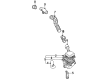
Mazda B2200 Oxygen Sensor Part Number: G609-18-861-9U
$238.40 MSRP: $317.93You Save: $79.53 (26%)Ships in 1-2 Business Days
Mazda B2200 Oxygen Sensor
Looking for Oxygen Sensor with proven quality? Choose OEM Oxygen Sensor. Mazda designs and builds them to strict factory specs. Every piece goes through rigorous quality checks. You'll get parts that fit right and work like new. Shop our huge inventory of OEM Mazda B2200 parts. Enjoy the highly competitive prices online. Our site is your one-stop shop. Each genuine B2200 part includes a manufacturer's warranty. Buy with confidence. Our return policy is simple and hassle-free. In a rush? Choose expedited delivery at checkout. You'll love the streamlined experience from search to checkout to receiving your order.
Mazda B2200 Oxygen Sensor Parts and Q&A
- Q:What is the function and testing procedure of an oxygen sensor on Mazda B2200?A:The oxygen sensor gives a signal to the computer showing the engine is running in either a rich or lean state and is useful in setting the air/fuel ratio to the right level, a low voltage signal indicates that there is too much oxygen in the exhaust (lean condition), and a high voltage signal indicates that there is not enough oxygen (rich condition). Oxygen sensors normally screw into the exhaust manifold or pipes and some models have heated sensors so that the closed loop can be reached more quickly. To test a heated sensor, unplug it then measure the resistance between the PWR and GND terminals, a reading between around 6 ohms at 68°F (20°C) is an indication of a good heater element. When the sensor is connected and the engine is on the voltage must be varied between 0.01-1.1 volts. With a non-heated sensor one should turn the engine to a running idle and run a voltmeter between the sensor and a good ground and a 4,500 rpm running engine should show about 0.7V, increases and decrease in engine speed should cause voltmeter to read between specifications of 0.5V-1.0V and 0V-0.4V respectively. To replace the sensor, disconnect the negative battery cable, lift the car on jackstands, and unplug the oxygen sensor to the engine control wiring, penetrating oil is required. To install, unscrew the sensor, then to remove, remove the sensor and insert in the mounting boss, screw on 27-33 ft. lbs. (37-45 Nm), reconnect the electrical wiring, lower the vehicle and reconnect the negative battery cable.
Related Mazda B2200 Parts
 Mazda B2200 Distributor
 Mazda B2200 Fuel Sending Unit
 Mazda B2200 Ignition Coil
 Mazda B2200 Antenna
 Mazda B2200 Flasher Relay
 Mazda B2200 Ignition Control Module
 Mazda B2200 Oil Pressure Gauge
 Mazda B2200 Relay
 Mazda B2200 Spark Plug Wire
 Mazda B2200 Tachometer
 Mazda B2200 Throttle Position Sensor
 Mazda B2200 Transmission Control Module