×
- Hello
- Login or Register
- Quick Links
- Live Chat
- Track Order
- Parts Availability
- RMA
- Help Center
- Contact Us
- Shop for
- Mazda Parts

My Garage
My Account
Cart
Genuine Mazda MPV Vapor Canister Purge Solenoid
Purge Valve- Select Vehicle by Model
- Select Vehicle by VIN
Select Vehicle by Model
orMake
Model
Year
Select Vehicle by VIN
For the most accurate results, select vehicle by your VIN (Vehicle Identification Number).
3 Vapor Canister Purge Solenoids found
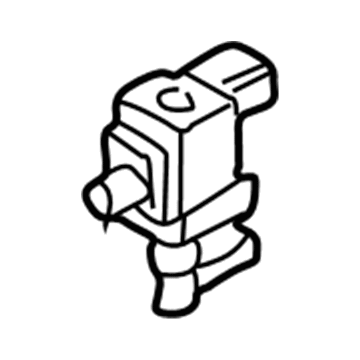
Mazda MPV Solenoid Valve Part Number: Z504-18-741A
$120.95 MSRP: $161.29You Save: $40.34 (26%)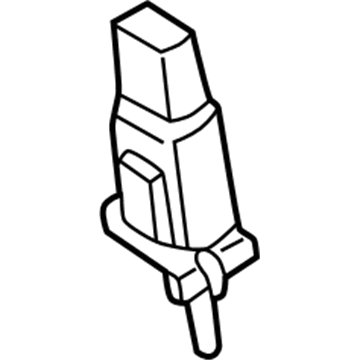
Mazda MPV Solenoid Valve Part Number: BP4Y-18-741
$144.53 MSRP: $192.74You Save: $48.21 (26%)Ships in 1-2 Business Days
Mazda MPV Purge Solenoid Part Number: GY01-18-741
Mazda MPV Vapor Canister Purge Solenoid
Looking for Vapor Canister Purge Solenoid with proven quality? Choose OEM Vapor Canister Purge Solenoid. Mazda designs and builds them to strict factory specs. Every piece goes through rigorous quality checks. You'll get parts that fit right and work like new. Shop our huge inventory of OEM Mazda MPV parts. Enjoy the highly competitive prices online. Our site is your one-stop shop. Each genuine MPV part includes a manufacturer's warranty. Buy with confidence. Our return policy is simple and hassle-free. In a rush? Choose expedited delivery at checkout. You'll love the streamlined experience from search to checkout to receiving your order.
Mazda MPV Vapor Canister Purge Solenoid Parts and Q&A
- Q:How does the evaporative emission control system function and what steps are involved in checking Vapor Canister and Vapor Canister Purge Solenoid on Mazda MPV?A:The evaporative emission control system captures fuel vapors that are created in the fuel tank when the engine is not running and temporarily stores them in a charcoal canister. When the engine starts, the vapors in the dynamic chamber are drawn into the engine and burned. The crank case emission control system performs similarly, with the purge control valve slightly opening to draw blowby gas during cruising, while on deceleration or heavy load the purge valve opens further allowing greater amounts of blowby gas into the dynamic chamber. In order to check the solenoid valve, after warming up the engine and letting it idle, disconnect the vacuum hose and check if there is any vacuum at the solenoid valve. Remove the hoses from the charcoal canister and dynamic chamber which verifies that no vacuum is reaching either of the components. Disconnect the electrical connector and battery voltage to the valve to check the operation. Remove the check and cut valve behind the right trim panel. Blow through port A to check for air out port B. Block port B to check for vacuum on port C. Replace valve as necessary. The check valve should pass the test of letting air flow in one direction only, must be replaced if it fails. For the separator, remove the right rear side trim panel and inspect for cracks or damage, replace with needed. Finally, label and remove all hoses from the canister, slide out of mount clips, visualize leakage or damage and replace if there are any leaks or damage.

Related Mazda MPV Parts
 Mazda MPV Catalytic Converter
 Mazda MPV EGR Valve
 Mazda MPV MAP Sensor
 Mazda MPV Canister Purge Valve
 Mazda MPV EGR Vacuum Solenoid
 Mazda MPV EGR Valve Gasket
 Mazda MPV Exhaust Hanger
 Mazda MPV Exhaust Heat Shield
 Mazda MPV Exhaust Manifold Gasket
 Mazda MPV Secondary Air Injection Check Valve
 Mazda MPV Vapor Canister
 Mazda MPV Vapor Pressure Sensor
Browse by Year
2006 Vapor Canister Purge Solenoid 2005 Vapor Canister Purge Solenoid 2004 Vapor Canister Purge Solenoid 2003 Vapor Canister Purge Solenoid 2002 Vapor Canister Purge Solenoid 2001 Vapor Canister Purge Solenoid 2000 Vapor Canister Purge Solenoid 1998 Vapor Canister Purge Solenoid 1997 Vapor Canister Purge Solenoid 1996 Vapor Canister Purge Solenoid