×
- Hello
- Login or Register
- Quick Links
- Live Chat
- Track Order
- Parts Availability
- RMA
- Help Center
- Contact Us
- Shop for
- Mazda Parts

My Garage
My Account
Cart
Genuine Mazda Protege Exhaust Manifold
Engine Exhaust Manifold- Select Vehicle by Model
- Select Vehicle by VIN
Select Vehicle by Model
orMake
Model
Year
Select Vehicle by VIN
For the most accurate results, select vehicle by your VIN (Vehicle Identification Number).
5 Exhaust Manifolds found
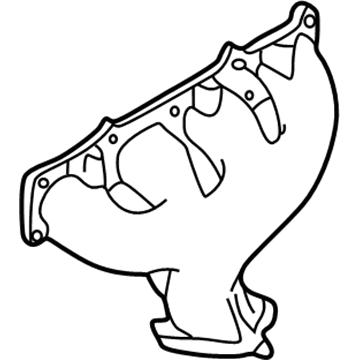
Mazda Protege Manifold Part Number: FP49-13-450
$381.42 MSRP: $512.77You Save: $131.35 (26%)Ships in 1-2 Business Days
Mazda Protege Manifold Part Number: BPE1-13-450
$614.64 MSRP: $839.83You Save: $225.19 (27%)Ships in 1-2 Business Days
Mazda Protege Manifold Part Number: Z509-13-451A
$73.58 MSRP: $96.59You Save: $23.01 (24%)Ships in 1-2 Business Days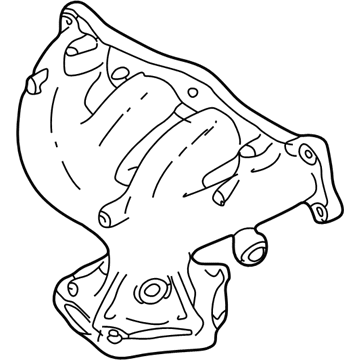
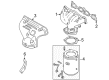
Mazda Protege Manifold Part Number: ZM01-13-450A
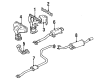
Mazda Protege Manifold Part Number: BPD3-13-450E
Mazda Protege Exhaust Manifold
The Mazda Protege Exhaust Manifold is the introductory part of the car exhaust system that collects the burnt gases from the individual cylinders and directs them to the catalytic converter in a safe manner to ensure the power is always high and the passengers are not put at risk. This component is made of cast iron on early Mazda compacts and is available in lighter stainless steel, but it has to remain sealed by a tight gasket to prevent carbon monoxide leaks. In the vast majority of sedans of this model, the Exhaust Manifold simply bolts right onto the side of the aluminum block and its tubes are identical to the number of cylinders in the block, so that a four-cylinder model has a compact four-runner design which minimizes back pressure and eliminates intake reversion. The pressure pulse that forms in the manifold as the gases exit the chamber assists in drawing the next charge out, a scavenging effect that enhances throttle response and fuel economy. More recent versions of the Protege may use a more rounded tubular design with longer tubes to maintain flow velocity at higher RPM, but older cast designs are more durable and faster to warm up thus the main differences are the length of the tubes, internal volume and material. In case there are cracks, the engine will lose power and the toxic fumes can leak into the cabin, a risk that Mazda owners can prevent by ensuring the Exhaust Manifold and its gasket are in good condition. Drivers are able to identify trouble when they hear ticking during start-up on their Mazda or smell exhaust around the firewall, obvious proof that the part should be checked.
Looking for Exhaust Manifold with proven quality? Choose OEM Exhaust Manifold. Mazda designs and builds them to strict factory specs. Every piece goes through rigorous quality checks. You'll get parts that fit right and work like new. Shop our huge inventory of OEM Mazda Protege parts. Enjoy the highly competitive prices online. Our site is your one-stop shop. Each genuine Protege part includes a manufacturer's warranty. Buy with confidence. Our return policy is simple and hassle-free. In a rush? Choose expedited delivery at checkout. You'll love the streamlined experience from search to checkout to receiving your order.
Mazda Protege Exhaust Manifold Parts and Q&A
- Q:How to remove and install an exhaust manifold on Mazda Protege?A:To access the exhaust manifold, first unhook the negative cable of the battery and other electrical connector of the oxygen sensor of the exhaust manifold. Removal of the sensor is required in case of a new manifold being installed. Then get rid of the heat shield bolts and detach the heat shield on the manifold. Streak penetrating oil on the exhaust manifold mounting bolts/nuts and the exhaust pipe nuts. Lift the car and place it safely atop jackstands and then unscrew the exhaust pipe off of the exhaust manifold and drop the car. In subsequent models, disconnect the exhaust pipe on the catalytic converter and disconnect the manifold with converter on it. Unscrew the manifold bolts/nuts and take the manifold off of the Cylinder Head, and put penetrating oil on any stubborn bolt/nut and give it time to penetrate, at least 15 minutes. In case the bolts/studs break during the removal process, vise-grip pliers should be used with the manifold removed to loosen the broken bolt/stud, or find stud removal tools where required. Installing a factory or exhaust system specific parts in place of damaged parts. To install, scraper all the traces of the old gasket material and carbon traces over the mating surfaces of the manifold and cylinder head, and be sure to inspect the manifold to determine whether it is warped or not in case the gasket was leaking. Install a fresh exhaust manifold gasket over the studs on the cylinder head, install the manifold and screw in the mounting bolts/nuts. Loosen the bolts/nuts in the middle to the fixed torque marked in a number of small steps and recontact the other components in the same order. In the event of reinstalling the oxygen sensor, use a special anti-seize thread lubricant. Lastly, operate the engine and examine exhaust emissions.
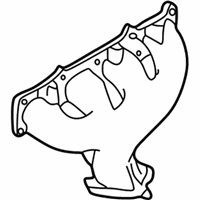
Related Mazda Protege Parts
 Mazda Protege Catalytic Converter
 Mazda Protege Muffler
 Mazda Protege Catalytic Converter Gasket
 Mazda Protege EGR Vacuum Solenoid
 Mazda Protege EGR Valve
 Mazda Protege Exhaust Flange Gasket
 Mazda Protege Exhaust Hanger
 Mazda Protege Exhaust Heat Shield
 Mazda Protege Exhaust Manifold Gasket
 Mazda Protege Exhaust Pipe
 Mazda Protege Exhaust Resonator
 Mazda Protege Vapor Canister Purge Solenoid
Browse by Year
2003 Exhaust Manifold 2002 Exhaust Manifold 2001 Exhaust Manifold
2000 Exhaust Manifold
1999 Exhaust Manifold
1998 Exhaust Manifold
1997 Exhaust Manifold
1996 Exhaust Manifold
1995 Exhaust Manifold
1994 Exhaust Manifold