×
- Hello
- Login or Register
- Quick Links
- Live Chat
- Track Order
- Parts Availability
- RMA
- Help Center
- Contact Us
- Shop for
- Mazda Parts

My Garage
My Account
Cart
Genuine Mazda Protege Vapor Canister
Fuel Vapor Canister- Select Vehicle by Model
- Select Vehicle by VIN
Select Vehicle by Model
orMake
Model
Year
Select Vehicle by VIN
For the most accurate results, select vehicle by your VIN (Vehicle Identification Number).
2 Vapor Canisters found

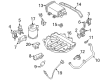
Mazda Protege Vacuum Container Part Number: KL02-20-339
$67.63 MSRP: $90.19You Save: $22.56 (26%)Ships in 1-2 Business Days
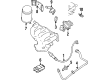
Mazda Protege Vapor Canister Part Number: Z5A8-13-96Z
Mazda Protege Vapor Canister
Looking for Vapor Canister with proven quality? Choose OEM Vapor Canister. Mazda designs and builds them to strict factory specs. Every piece goes through rigorous quality checks. You'll get parts that fit right and work like new. Shop our huge inventory of OEM Mazda Protege parts. Enjoy the highly competitive prices online. Our site is your one-stop shop. Each genuine Protege part includes a manufacturer's warranty. Buy with confidence. Our return policy is simple and hassle-free. In a rush? Choose expedited delivery at checkout. You'll love the streamlined experience from search to checkout to receiving your order.
Mazda Protege Vapor Canister Parts and Q&A
- Q:How to remove and install Vapor Canister on Mazda Protege?A:The formation is done to trap and hold the molecules of fuel that evaporate from the fuel tank, throttle body and intake manifold. It shall not allow hydrocarbon to escape to atmosphere. The Evaporative Emission Control (EVAP) system featuring charcoal canister, connecting lines, catch tank and purge solenoid valve. The canister location differs between earlier and later models. When the engine is not running, charcoal absorbs the fuel vapors, which are then purged during the operation. If the check valve fails or if the canister is damaged or the hoses are compromised, then you might have an issue with poor idle, stalling and driveability. Any noticeable fuel odor, or signs of fuel loss, may suggest leaks within the fuel lines or canister. Any hose that has kinks or cracks should be examined. Also, if there are any leaks from the bottom of the canister, it should be disposed of. The canister should be examined for any damage. A filter clogged with powder or a check valve stuck closed can be diagnosed by applying low-pressure air. The vacuum valve on earlier units should be tested for operation at various engine temperatures, and on later units test the purge solenoid valve for operation. When replacing the charcoal canister, first label and disconnect the vacuum hoses, remove bolts attaching the mounting clamp, and disconnect additional hoses. Installation occurs in the reverse order.

Related Mazda Protege Parts
 Mazda Protege Muffler
 Mazda Protege Canister Purge Valve
 Mazda Protege Catalytic Converter Gasket
 Mazda Protege EGR Tube
 Mazda Protege EGR Tube Gaskets
 Mazda Protege EGR Vacuum Solenoid
 Mazda Protege EGR Valve
 Mazda Protege EGR Valve Gasket
 Mazda Protege Exhaust Heat Shield
 Mazda Protege Exhaust Resonator
 Mazda Protege Secondary Air Injection Check Valve
 Mazda Protege Vapor Canister Purge Solenoid