×
- Hello
- Login or Register
- Quick Links
- Live Chat
- Track Order
- Parts Availability
- RMA
- Help Center
- Contact Us
- Shop for
- Mazda Parts

My Garage
My Account
Cart
Genuine Mazda 323 Starter
Starter Ignition- Select Vehicle by Model
- Select Vehicle by VIN
Select Vehicle by Model
orMake
Model
Year
Select Vehicle by VIN
For the most accurate results, select vehicle by your VIN (Vehicle Identification Number).
1 Starter found
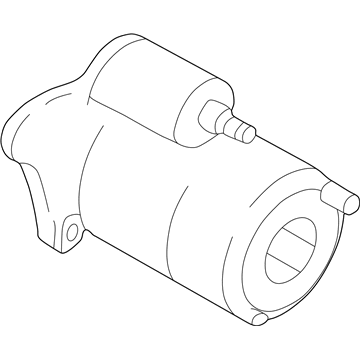
Mazda 323 Starter Part Number: B676-18-400R-00
Mazda 323 Starter
The Mazda 323 Starter was developed to transform battery electrical energy into rotary energy to crank the engine, which enables the Mazda hatchback, a compact car, to burst into action by turning the key with a mere turn of the switch. The machine is installed in a hardened casing, fed by bulky cables directly out of the battery, and thus, when the driver chooses START, the solenoid thrusts the tiny drive gear into the flywheel, followed by supplying power to the motor at the same instant. Internally, there is an armature which is wound around field coils or contemporary permanent magnets, and which is pulled by an electromagnetic force that is transmitted by the drive and an overrunning clutch which automatically disengages to stop grinding once the engine is fired. Over the years Mazda had two major solutions for the Starter, a direct drive unit which was applied in earlier production, and a gear reduction arrangement which came in as the engines increased in power but space became tighter in the bay. The direct drive type is a design where the armature and the drive rotate at the same speed, making the design simple but requiring a heavier motor, whereas the gear reduction type diverts power through a small reduction gear set, which multiplies the torque that allows a smaller motor to accomplish the same task with less load on the battery. There are safety circuits like the neutral or clutch switch, and the control line has a relay, so that an accidental engagement cannot take place; the Starter must disengage without any abruptness. All these improvements have enabled Mazda models including the second generation of the 323 to have consistent starts under any weather conditions.
Looking for Starter with proven quality? Choose OEM Starter. Mazda designs and builds them to strict factory specs. Every piece goes through rigorous quality checks. You'll get parts that fit right and work like new. Shop our huge inventory of OEM Mazda 323 parts. Enjoy the highly competitive prices online. Our site is your one-stop shop. Each genuine 323 part includes a manufacturer's warranty. Buy with confidence. Our return policy is simple and hassle-free. In a rush? Choose expedited delivery at checkout. You'll love the streamlined experience from search to checkout to receiving your order.
Mazda 323 Starter Parts and Q&A
- Q:What steps should be taken before diagnosing starter problems on Mazda 323?A:During battery diagnosis, it is important to make sure that the battery is charged. When the switch is operated, and the starter fails to turn on, make sure that the shift lever is in Neutral or Park when using an automatic transaxle, or that the clutch pedal is released when using a manual transaxle. Ensure that the battery is charged and that all cables at the battery and starter solenoid terminals are clean and are in place. When the starter is rotating and yet the engine fails to crank, then the over running clutch of the starter is slipping and, therefore, the starter requires replacement. When the starter is not working at all and the solenoid clicks upon the switching, it can be the battery, the primary solenoid contacts, or the starter, or the engine may have seized. When the solenoid plunger cannot be heard when turning the switch, the battery can be faulty, the circuit may be open or the starter solenoid could be faulty. To test the solenoid, jumper lead with battery positive to the ignition switch terminal of the solenoid, this time the solenoid should be working and therefore there must be an issue with the ignition switch, Neutral start switch or wiring. In the event that the starter remains inoperative, pull out starter/solenoid assembly, disassemble, test and repair it. When cranking the engine with an abnormally slow rate, verify that the battery is charged, that all the terminal connections are firmly secured; partial seizure of the engine, or inappropriate viscosity of the oil can be reasons that make it not crank. Start the engine until it gets to normal operating temperature and then remove the coil wire off the distributor cap and ground it on the engine. Connect the positive lead of a voltmeter to the positive post of the battery and the negative connection to the negative post. Turn on the engine, and record voltmeter readings as soon as a constant value is registered, without taking longer than 15 seconds of starter action at once. The normal cranking speed is a reading of nine volts and above; a reading of nine volts and above but with a slow cranking rate then the starter is defective. This is because, when the reading is lower than nine volts and the cranking speed is slow, the solenoid contacts might be burned, the starter might be faulty, the battery might have been discharged or the connection could be faulty.
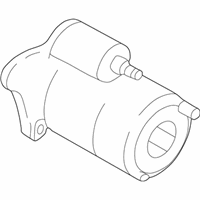
Related Mazda 323 Parts
 Mazda 323 Alternator Bearing
 Mazda 323 Alternator Bracket
 Mazda 323 Alternator Brush
 Mazda 323 Alternator Pulley
 Mazda 323 Battery Hold Downs
 Mazda 323 Battery Tray
 Mazda 323 Idler Pulley
 Mazda 323 Starter Brush
 Mazda 323 Starter Drive Gear