×
- Hello
- Login or Register
- Quick Links
- Live Chat
- Track Order
- Parts Availability
- RMA
- Help Center
- Contact Us
- Shop for
- Mazda Parts

My Garage
My Account
Cart
Genuine Mazda 626 Brake Disc
Disc Rotor- Select Vehicle by Model
- Select Vehicle by VIN
Select Vehicle by Model
orMake
Model
Year
Select Vehicle by VIN
For the most accurate results, select vehicle by your VIN (Vehicle Identification Number).
7 Brake Discs found

Mazda 626 Rotor Part Number: GJ55-33-25XD
$14.73 MSRP: $19.34You Save: $4.61 (24%)Ships in 1-2 Business Days
Mazda 626 Rotor Part Number: G037-26-251C
Mazda 626 Rotor Part Number: G091-33-251C
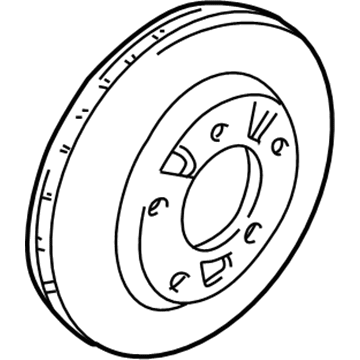
Mazda 626 Rotor Part Number: GA2Y-33-25XA
Mazda 626 Rotor Part Number: GA3Y-26-251
Mazda 626 Rotor Part Number: GD7Y-33-25XA
Mazda 626 Rotor Part Number: GW55-26-251
Mazda 626 Brake Disc
Looking for Brake Disc with proven quality? Choose OEM Brake Disc. Mazda designs and builds them to strict factory specs. Every piece goes through rigorous quality checks. You'll get parts that fit right and work like new. Shop our huge inventory of OEM Mazda 626 parts. Enjoy the highly competitive prices online. Our site is your one-stop shop. Each genuine 626 part includes a manufacturer's warranty. Buy with confidence. Our return policy is simple and hassle-free. In a rush? Choose expedited delivery at checkout. You'll love the streamlined experience from search to checkout to receiving your order.
Mazda 626 Brake Disc Parts and Q&A
- Q: How to properly inspect and service a vehicle's brake disc on Mazda 626?A:Lift the car and place it on jackstands and take off the wheel and tire. The second thing is to remove the brake caliper assembly and leave the Brake Hose in place, then after taking out the caliper mounting bolts, tie the caliper in another piece of wire, but do not strain the brake hose or the caliper will be damaged. Check the surfaces of the brake disc (light scoring or grooving is normal but deep grooves or serious erosion are not). When pulsating takes place when braking, have a dial indicator attached to the caliper mounting bracket, brake disc turned and observe the extent of runout at the inboard and outboard sides. When the runout surpasses the maximum permissible limit; then the brake disc must be removed and brought to an automotive machine shop where it is refinished. Measure the brake disc thickness using a micrometer, when the thickness is less than specified, change the brake disc with a new one. Also check the thickness of the disc at various locations and any change beyond 0.0005-inch could result in pedal vibrations on braking. In case of these variations and the thickness of the disc is reasonable, then the brake disc can be removed to be resurfaced. This requires special tools and techniques to remove the disc off the hub, and therefore the hub must be removed and the assembly must be taken to a dealer or a shop well-equipped to do the disc turning or disc replacement.
Related Mazda 626 Parts
 Mazda 626 Fuel Tank
 Mazda 626 Antenna
 Mazda 626 Alternator Bearings
 Mazda 626 Brake Light Switches
 Mazda 626 Coil Springs
 Mazda 626 Control Arm
 Mazda 626 Rocker Arm
 Mazda 626 Windshield Wiper Motors