×
- Hello
- Login or Register
- Quick Links
- Live Chat
- Track Order
- Parts Availability
- RMA
- Help Center
- Contact Us
- Shop for
- Mazda Parts

My Garage
My Account
Cart
Genuine Mazda 626 Brake Shoe Set
Brake Shoe- Select Vehicle by Model
- Select Vehicle by VIN
Select Vehicle by Model
orMake
Model
Year
Select Vehicle by VIN
For the most accurate results, select vehicle by your VIN (Vehicle Identification Number).
3 Brake Shoe Sets found
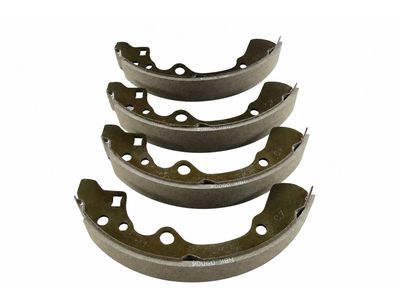
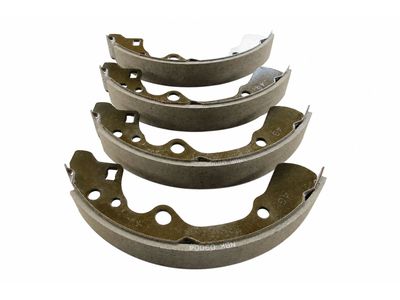
Mazda 626 Shoes Part Number: GJ83-26-38ZA
$59.48 MSRP: $79.32You Save: $19.84 (26%)Ships in 1-2 Business Days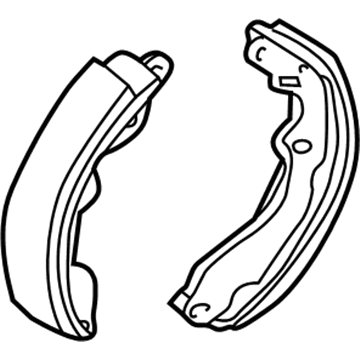
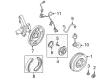
Mazda 626 Shoes Part Number: GAYA2638ZB

Mazda 626 Rear Shoes Part Number: G0Y0-26-38Z
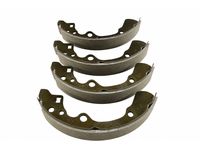
Mazda 626 Brake Shoe Set
Looking for Brake Shoe Set with proven quality? Choose OEM Brake Shoe Set. Mazda designs and builds them to strict factory specs. Every piece goes through rigorous quality checks. You'll get parts that fit right and work like new. Shop our huge inventory of OEM Mazda 626 parts. Enjoy the highly competitive prices online. Our site is your one-stop shop. Each genuine 626 part includes a manufacturer's warranty. Buy with confidence. Our return policy is simple and hassle-free. In a rush? Choose expedited delivery at checkout. You'll love the streamlined experience from search to checkout to receiving your order.
Mazda 626 Brake Shoe Set Parts and Q&A
- Q:What precautions should be taken when working on the Brake Shoe Set to ensure safety and proper installation on Mazda 626?A:Whenever working on the brake system, be aware that asbestos dust is present, which is harmful to health, so take care not to inhale it. Raise the vehicle and support it securely on jackstands, then remove the wheel. All four rear shoes should be replaced at the same time, but to avoid mixing up parts, work on only one brake assembly at a time. Remove the drum/hub assembly; if it cannot be removed easily, remove the plug in the backing plate, insert a screwdriver through the hole, and press on the hold spring to widen the shoe clearance. If this doesn't allow drum removal, loosen the parking brake lever adjusting nut to increase the stroke. Remove the brake shoe return springs, hold down springs, and pins, then take out the leading shoe and the adjuster, which may require releasing the adjuster with a screwdriver to ease the removal. Next, remove the trailing shoe and disconnect the parking brake wire, followed by removing the clip and disconnecting the operating lever from the shoe. Lightly lubricate the contact surfaces of the brake backing plate with white lithium base grease, then install the operating lever on the new trailing shoe and the trailing shoe with the anti-rattle spring in place. Connect the parking brake wire, assemble the leading shoe and adjuster, connect the adjuster to the anti-rattle spring, and rotate the assembly into position. Install the hold down springs and return springs, then center the shoe assembly. Inspect the brake drum for cracks, score marks, deep scratches, and hard spots, which will appear as small discolored areas; if hard spots cannot be removed with fine emery cloth or if any other conditions exist, the drum must be taken to an automotive machine shop to be turned. If the drum will not "clean up" before reaching the maximum diameter in the machining operation, it must be replaced with a new one, with the maximum diameter cast into each brake drum. Finally, install the brake drum/hub assembly, adjust the wheel bearings, mount the wheel, install the wheel lugs, tighten to the specified torque, lower the vehicle, and make a number of forward stops to adjust the brakes until satisfactory pedal action is obtained.
Related Mazda 626 Parts
 Mazda 626 Brake Pads
 Mazda 626 Axle Bearing Lock Rings
 Mazda 626 Axle Shaft Seal
 Mazda 626 Brake Booster Vacuum Hose
 Mazda 626 Brake Controller
 Mazda 626 Brake Line
 Mazda 626 Hydraulic Hose
 Mazda 626 Speed Sensor
 Mazda 626 Wheel Cylinder
 Mazda 626 Wheel Hub
 Mazda 626 Wheel Hub Bolt
 Mazda 626 Wheel Stud
Browse by Year
2002 Brake Shoe Set 2001 Brake Shoe Set 2000 Brake Shoe Set 1999 Brake Shoe Set 1998 Brake Shoe Set 1997 Brake Shoe Set 1996 Brake Shoe Set 1995 Brake Shoe Set 1994 Brake Shoe Set 1993 Brake Shoe Set 1992 Brake Shoe Set 1991 Brake Shoe Set 1990 Brake Shoe Set 1989 Brake Shoe Set 1988 Brake Shoe Set 1987 Brake Shoe Set 1986 Brake Shoe Set 1985 Brake Shoe Set 1984 Brake Shoe Set