×
- Hello
- Login or Register
- Quick Links
- Live Chat
- Track Order
- Parts Availability
- RMA
- Help Center
- Contact Us
- Shop for
- Mazda Parts

My Garage
My Account
Cart
Genuine Mazda MPV Fuel Pump
Gas Pump- Select Vehicle by Model
- Select Vehicle by VIN
Select Vehicle by Model
orMake
Model
Year
Select Vehicle by VIN
For the most accurate results, select vehicle by your VIN (Vehicle Identification Number).
6 Fuel Pumps found

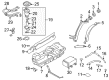
Mazda MPV Fuel Pump Part Number: AJ51-13-350
$57.48 MSRP: $453.04You Save: $395.56 (88%)Ships in 1-2 Business Days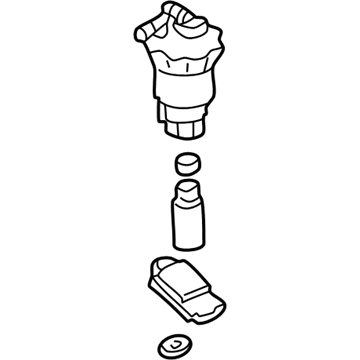
Mazda MPV Fuel Pump Part Number: AJ51-13-35Z
$376.66 MSRP: $506.37You Save: $129.71 (26%)Ships in 1-2 Business Days
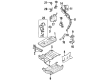
Mazda MPV Fuel Pump Part Number: JE47-13-35ZA
$470.52 MSRP: $632.54You Save: $162.02 (26%)Ships in 1-2 Business Days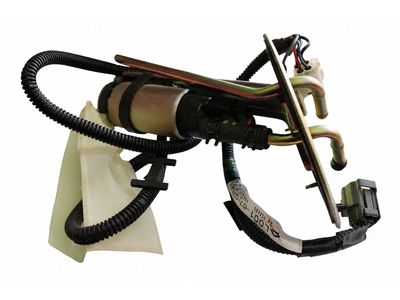
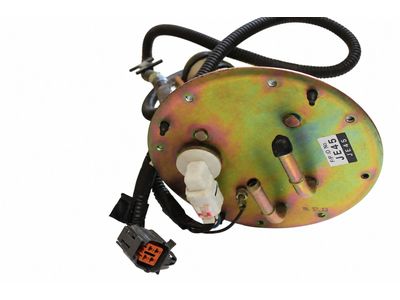
Mazda MPV Fuel Pump Part Number: JE45-13-35ZB
Mazda MPV Fuel Pump Part Number: JE17-13-350A
Mazda MPV Fuel Pump Part Number: GY01-13-35ZA
Mazda MPV Fuel Pump
Mazda MPV Fuel Pump supplies the engine with the required quantity of gasoline from the tank to ensure that the van can start fast and run efficiently. In early Mazda models which had to depend upon carburetors, a cam-driven mechanical pump was mounted on the engine block and relied on a lever and diaphragm to draw fuel forward at a low six to fifteen pounds per square inch, which was just sufficient to fill the carb bowl. Subsequent models in the MPV series adopted fuel injection and acquired an electric pump immersed in the tank which was cooled and silenced by the gasoline adjacent to it and generated 40 to 60 psi to press the injectors. That transition reflected more general Mazda engine initiatives to greater efficiency and reduced emissions. The two styles are the same in terms of their mission; however, they differ in terms of location and pressure, as well as control, whereby the electric unit is controlled by the vehicle ECU and safeguarded by a relay that breaks power during a crash. A no-start trouble-shooting driver can hear the low whir of the pump when the key is in the on position, then check the battery reading at the connector, or check the delivery by pressure and volume tests in gallons per hour. To compute the possibility of the stock system meeting the upgrades, multiply the estimated horsepower by 0.5 or 0.75, and then divide the number by 6.2 to view the flow that is required by the Fuel Pump. According to Mazda factory instructions, it is advisable to replace a worn-out Fuel Pump, which will prevent the problem of failing to start on any trip as well as lack of the required power at any time.
Looking for Fuel Pump with proven quality? Choose OEM Fuel Pump. Mazda designs and builds them to strict factory specs. Every piece goes through rigorous quality checks. You'll get parts that fit right and work like new. Shop our huge inventory of OEM Mazda MPV parts. Enjoy the highly competitive prices online. Our site is your one-stop shop. Each genuine MPV part includes a manufacturer's warranty. Buy with confidence. Our return policy is simple and hassle-free. In a rush? Choose expedited delivery at checkout. You'll love the streamlined experience from search to checkout to receiving your order.
Mazda MPV Fuel Pump Parts and Q&A
- Q:How to check the fuel pump and fuel system pressure on Mazda MPV?A:The subsequent checks presuppose that the fuel filter is in good condition, but, in case it is unclear whether it is in good conditions, it should be changed. To test the functionality of the fuel pump, connect the two terminals of the yellow two-pin check connector, and have an assistant turn the ignition key to On, and at the same time listen to the fuel tank, a whirring noise should be heard, which means the pump is working. The absence of sound should first be checked on the EGI main fuse, but excessive sound may last too long and this means that the fuel system is not pressurizing correctly so pressure should be checked. Check the fuel system pressure To release the pressure in the system, unscrew the negative battery terminal, and unscrew the fuel line to the pulsation damper or fuel filter. Install a tee fitting and a fuel pressure gauge and connect the gauge to the fuel line, reconnect the negative battery terminal, bridge the yellow connector terminals, and flick the ignition switch to ON. Record the pressure of the fuel and compare it, in case it is lower than specifications, look after leaks, change the fuel filter in case needed and examine the fuel pump pressure and the fuel regulator. In case the pressure surpasses specifications, try a replacement of the Fuel Pressure Regulator. Once the ignition switch is turned to Off and the hold pressure checked (five minutes later) the presence of leaks, the fuel pump pressure, and the fuel pressure regulator outlet should be checked. To check the fuel pump pressure, release system pressure, disconnect negative battery terminal and place a fuel pressure gauge on the fuel rail. Once all the negative battery terminal is reconnected, and the yellow connector terminals bridged, set the ignition switch to the On position and record the pressure reading. When it is lower than the specifications, check whether it has leaks; in case it has none, change the fuel pump. Once the ignition key is switched to Off, wait five minutes and check the hold pressure again to ensure that there is no leakage. Lastly, in relay check of the fuel pump, identify the relay behind the kick panel of the passenger side, probe the terminals to give the right voltage, and unscrew the relay to test its resistance using an ohmmeter, and exchange the relay in case any of the tests show wrong results.
- Q:How to relieve the system fuel pressure and remove the fuel pump from the fuel tank on Mazda MPV?A:Defuel the system pressure, by unclogging the fuel tank filler cap to relieve the tank pressure. The second step is to take the middle seat and the floor mat off so as to reach the fuel pump cover, which can be removed by taking the four screws and peeling it off the floor. Once the cover is removed, unplug the fuel pump electrical connector and remove the fuel inlet and return lines. Take the screws off the fuel pump assembly and very carefully pull it off the fuel tank, twisting upwards at the bottom part where required to get it out of the tank. Disassemble the unit by loosening the screw of the clamp and loosening the electrical connector of the fuel pump. The backwards sequence of the removal should lead to the installation, and in case of the gasket between the fuel pump and the fuel tank being dried, cracked, or damaged in some way, it must be replaced.
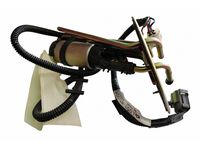
Related Mazda MPV Parts
 Mazda MPV Air Filter
 Mazda MPV Fuel Filter
 Mazda MPV Gas Cap
 Mazda MPV Air Intake Hose
 Mazda MPV Fuel Tank
 Mazda MPV Accelerator Cable
 Mazda MPV Fuel Pump Gasket
 Mazda MPV Fuel Tank Strap
 Mazda MPV Fuel Tank Vent Valve
 Mazda MPV Intake Manifold Gasket
 Mazda MPV Shut Off Valve
 Mazda MPV Temperature Sender