×
- Hello
- Login or Register
- Quick Links
- Live Chat
- Track Order
- Parts Availability
- RMA
- Help Center
- Contact Us
- Shop for
- Mazda Parts

My Garage
My Account
Cart
Genuine Mazda MX-5 Miata Transmission Assembly
Trans Assembly- Select Vehicle by Model
- Select Vehicle by VIN
Select Vehicle by Model
orMake
Model
Year
Select Vehicle by VIN
For the most accurate results, select vehicle by your VIN (Vehicle Identification Number).
4 Transmission Assemblies found

Mazda MX-5 Miata Transmission Part Number: M602-03-000
$1825.79 MSRP: $2494.74You Save: $668.95 (27%)Ships in 1-2 Business DaysMazda MX-5 Miata Transmission Part Number: M604-03-000
$3244.10 MSRP: $4432.72You Save: $1188.62 (27%)Ships in 1-2 Business DaysMazda MX-5 Miata Transmission Part Number: SJ14-19-090B
$4124.30 MSRP: $5635.40You Save: $1511.10 (27%)Ships in 1-2 Business DaysMazda MX-5 Miata Transmission Part Number: ZP91-19-090R
Mazda MX-5 Miata Transmission Assembly
Looking for Transmission Assembly with proven quality? Choose OEM Transmission Assembly. Mazda designs and builds them to strict factory specs. Every piece goes through rigorous quality checks. You'll get parts that fit right and work like new. Shop our huge inventory of OEM Mazda MX-5 Miata parts. Enjoy the highly competitive prices online. Our site is your one-stop shop. Each genuine MX-5 Miata part includes a manufacturer's warranty. Buy with confidence. Our return policy is simple and hassle-free. In a rush? Choose expedited delivery at checkout. You'll love the streamlined experience from search to checkout to receiving your order.
Mazda MX-5 Miata Transmission Assembly Parts and Q&A
- Q:How to remove and reinstall a manual Transmission Assembly on Mazda MX-5 Miata?A:To remove the transmission, first the negative wire must be disconnected. Inside the vehicle, detach the shift lever. Raise and securely support the vehicle on jackstands. Take off the splash shield under the front clearance and any exhaust system components needed for it. Unplug the speedo cable and wire harness connectors from the trans then remove the starter and clutch release cylinder. Remove the driveshaft and seal the end of the transmission with a plastic bag. This will restrict spillage and contamination. Place a jack under the transmission, preferably a special jack, and use safety chains to steady the transmission. Detach the powerplant frame and unbolt the transmission from the engine. After ensuring that any wires or hoses have been disconnected, move the transmission and jack towards the rear of the vehicle until the transmission input shaft is free of the clutch hub, while keeping the transmission level. Do not shake the transmission during this process so that the camshaft position sensor doesn't get damaged. Once the input shaft clears, the transmission is lowered and pulled from under the vehicle. Ensure the clutch pedal is not depressed while the transmission is out. At this stage, you will check the clutch parts and replace new clutch parts if necessary. To install the transmission, as during removal, we secure the transmission to the jack. We crank it up in line with the engine and slide it forwards. The angle of the transmission can be altered if necessary. Subsequently, we push the input shaft into the hub of the clutch plate. Install and secure the bolts that join the transmission to the engine, and install the power plant frame and tighten the bolts. Eliminate the jack that holds the transmission now reinstall all the items removed. Lastly, verify that all wire, hoses and speedometer cable have been connected, fill the transmission with lubricant to the right level, lower the vehicle, install shift lever assembly, reconnect negative battery cable and road test for proper operation while checking for leaks.
Related Mazda MX-5 Miata Parts
 Mazda MX-5 Miata Automatic Transmission Filter
 Mazda MX-5 Miata Clutch Disc
 Mazda MX-5 Miata Clutch Slave Repair Kit
 Mazda MX-5 Miata Flywheel
 Mazda MX-5 Miata Manual Transmission Extension Housing Seal
 Mazda MX-5 Miata Pressure Plate
 Mazda MX-5 Miata Transfer Case Gasket
 Mazda MX-5 Miata Transfer Case Seal
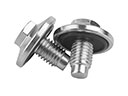 Mazda MX-5 Miata Transmission Drain Plug
 Mazda MX-5 Miata Transmission Gasket
 Mazda MX-5 Miata Transmission Oil Cooler Hose
 Mazda MX-5 Miata Transmission Pan
Browse by Year
2024 Transmission Assembly 2023 Transmission Assembly 2022 Transmission Assembly 2021 Transmission Assembly 2020 Transmission Assembly 2019 Transmission Assembly 2018 Transmission Assembly 2017 Transmission Assembly 2016 Transmission Assembly 2015 Transmission Assembly 2014 Transmission Assembly 2013 Transmission Assembly 2012 Transmission Assembly 2011 Transmission Assembly 2010 Transmission Assembly 2009 Transmission Assembly 2008 Transmission Assembly 2007 Transmission Assembly 2006 Transmission Assembly