×
- Hello
- Login or Register
- Quick Links
- Live Chat
- Track Order
- Parts Availability
- RMA
- Help Center
- Contact Us
- Shop for
- Mazda Parts

My Garage
My Account
Cart
Genuine Mazda MX-6 Brake Pad Set
Disc Brake Pad Set- Select Vehicle by Model
- Select Vehicle by VIN
Select Vehicle by Model
orMake
Model
Year
Select Vehicle by VIN
For the most accurate results, select vehicle by your VIN (Vehicle Identification Number).
3 Brake Pad Sets found
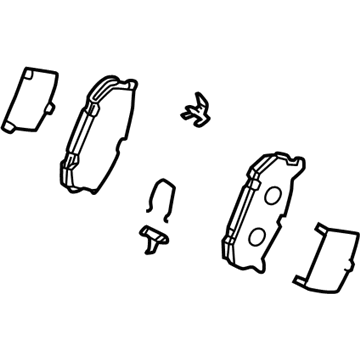
Mazda MX-6 Brake Pads Part Number: G5Y6-26-48ZA
$98.35 MSRP: $131.16You Save: $32.81 (26%)Ships in 1-2 Business Days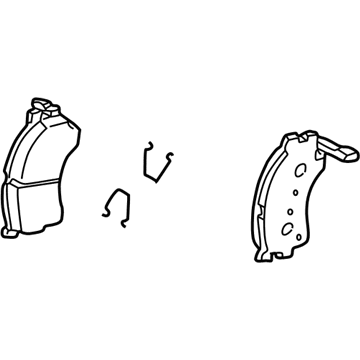
Mazda MX-6 Brake Pads Part Number: GGYA-33-23ZC
$173.64 MSRP: $231.56You Save: $57.92 (26%)Ships in 1-2 Business Days
Mazda MX-6 Front Pads Part Number: G1YH-33-28Z-9F
Mazda MX-6 Brake Pad Set
Looking for Brake Pad Set with proven quality? Choose OEM Brake Pad Set. Mazda designs and builds them to strict factory specs. Every piece goes through rigorous quality checks. You'll get parts that fit right and work like new. Shop our huge inventory of OEM Mazda MX-6 parts. Enjoy the highly competitive prices online. Our site is your one-stop shop. Each genuine MX-6 part includes a manufacturer's warranty. Buy with confidence. Our return policy is simple and hassle-free. In a rush? Choose expedited delivery at checkout. You'll love the streamlined experience from search to checkout to receiving your order.
Mazda MX-6 Brake Pad Set Parts and Q&A
- Q: Should a Brake Pad Set be replaced on both wheels at the same time on Mazda MX-6?A:Both wheels should be worked with simultaneously and both disc brake pads replaced one at a time with the other assembled brake serving as a guide in case of necessity. Asbestos dust may be hazardous to health so when handling the brake system be careful of it. To start, unscrew a top of the brake fluid reservoir and siphon, approximately, two ounces of brake fluid into a container to be discarded. Unscrew the bolts of the front wheel, lift the front part of the vehicle, and hold it toughly on jackstands and take out the front wheels. Then drop the two caliper bolts and lift the caliper out of the disc. Take a screwdriver and loosen the clips and remove the outer pad, and then pull off the inner pad of the caliper. Check caliper boot; peel back edge checking that there is no leakage of fluids. Insert the caliper back into the piston until it bottoms out with a C-clamp and insert the inner pad and snap it into the piston. Then insert the outer pad into position and attach it to the caliper before turning the caliper back to position. Connect the bolts and tighten them to the desired torque and then bleed the brakes and finally fix the wheels after which the vehicle should be lowered.


