×
- Hello
- Login or Register
- Quick Links
- Live Chat
- Track Order
- Parts Availability
- RMA
- Help Center
- Contact Us
- Shop for
- Mazda Parts

My Garage
My Account
Cart
Genuine Mazda Tribute Fuse
Circuit Fuse- Select Vehicle by Model
- Select Vehicle by VIN
Select Vehicle by Model
orMake
Model
Year
Select Vehicle by VIN
For the most accurate results, select vehicle by your VIN (Vehicle Identification Number).
9 Fuses found

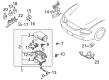
Mazda Tribute Fuse Part Number: 0000-11-022A
$0.65 MSRP: $0.86You Save: $0.21 (25%)Ships in 1-2 Business Days
Mazda Tribute Fuse Part Number: 0000-11-021A
$0.65 MSRP: $0.86You Save: $0.21 (25%)Ships in 1-2 Business Days
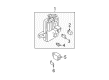
Mazda Tribute Fuse Part Number: 9970-51-205
$0.95 MSRP: $1.27You Save: $0.32 (26%)Ships in 1-2 Business Days
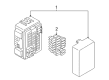
Mazda Tribute Fuse Part Number: BP4K-67-M25
$0.29 MSRP: $0.39You Save: $0.10 (26%)Ships in 1-2 Business Days
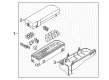
Mazda Tribute Relay Part Number: ZZCB-67-069A
$2.01 MSRP: $2.68You Save: $0.67 (25%)Mazda Tribute Fuse Part Number: ZZCB-66-136
$3.96 MSRP: $5.28You Save: $1.32 (25%)Mazda Tribute Fuse Part Number: ZZCA-61-546
$5.09 MSRP: $6.78You Save: $1.69 (25%)Mazda Tribute Fuse Part Number: ZZCA-66-136
$4.16 MSRP: $5.55You Save: $1.39 (26%)
Mazda Tribute Fuse Part Number: 0000-11-215A
Mazda Tribute Fuse
Looking for Fuse with proven quality? Choose OEM Fuse. Mazda designs and builds them to strict factory specs. Every piece goes through rigorous quality checks. You'll get parts that fit right and work like new. Shop our huge inventory of OEM Mazda Tribute parts. Enjoy the highly competitive prices online. Our site is your one-stop shop. Each genuine Tribute part includes a manufacturer's warranty. Buy with confidence. Our return policy is simple and hassle-free. In a rush? Choose expedited delivery at checkout. You'll love the streamlined experience from search to checkout to receiving your order.
Mazda Tribute Fuse Parts and Q&A
- Q:How is the Fuse designed to safeguard electrical circuits, and what should be considered when replacing fuse on Mazda Tribute?A:Fuses, circuit breakers and fusible links are all used to protect the electrical circuits of the vehicle, and a group of fuse blocks are found underneath the instrument panel and in the engine compartment. On models older than 2012 the fuse panel cover is either the left kick panel or right side of the console and on 2013 and later models the rear fuse box is on the right rear quarter panel and the Body Control Module fuses on the passenger side of the dash behind the glove box. A given circuit is safeguarded by each fuse and is labeled on the fuse panel cover, which is difficult to decipher or lost so a full list of all fuses and relays can be found in the owner manual. Blade terminal design Miniaturized fuses are easily removed and replaced, and it is recommended that a fuse should be checked using a test light; when current runs through one of the terminals and none on the other side, the fuse is blown, which can also be verified visually. Alternation of fuses which have been blown to a different type is also very important because one should not use a fuse with a different value of a circuit because every circuit needs a certain level of protection, and the desired value is anticipated within the moulded amperage figure on the fuse body. When a replacement fuse trips out instantly, the fault that caused the tripping, which is usually a short circuit in a damaged wire, should be corrected and the replacement fuse replaced again. Fusible links provide protection to certain circuits, sometimes located within the engine compartment fuse/relay box, frequently of high-current circuits, such as the starter circuit; the link is larger than a standard fuse and is usually replaced by simply unplugging it or unbolting it, always being of the same amperage.

Related Mazda Tribute Parts
 Mazda Tribute Key Fob
 Mazda Tribute Starter Relay
 Mazda Tribute Antenna Mast
 Mazda Tribute Battery Fuse
 Mazda Tribute Crankshaft Position Sensor
 Mazda Tribute Dimmer Switch
 Mazda Tribute Engine Control Module
 Mazda Tribute Horn
 Mazda Tribute Relay
 Mazda Tribute Relay Block
 Mazda Tribute Tachometer
 Mazda Tribute Wiper Linkage