×
- Hello
- Login or Register
- Quick Links
- Live Chat
- Track Order
- Parts Availability
- RMA
- Help Center
- Contact Us
- Shop for
- Mazda Parts

My Garage
My Account
Cart
Genuine Mazda B2200 Spark Plug Wire
Spark Plug Ignition Wires- Select Vehicle by Model
- Select Vehicle by VIN
Select Vehicle by Model
orMake
Model
Year
Select Vehicle by VIN
For the most accurate results, select vehicle by your VIN (Vehicle Identification Number).
2 Spark Plug Wires found

Mazda B2200 Cable Set Part Number: 0000-18-094A
$27.74 MSRP: $37.00You Save: $9.26 (26%)Ships in 1-2 Business DaysMazda B2200 Cable Set Part Number: 0000-18-104A
Mazda B2200 Spark Plug Wire
Looking for Spark Plug Wire with proven quality? Choose OEM Spark Plug Wire. Mazda designs and builds them to strict factory specs. Every piece goes through rigorous quality checks. You'll get parts that fit right and work like new. Shop our huge inventory of OEM Mazda B2200 parts. Enjoy the highly competitive prices online. Our site is your one-stop shop. Each genuine B2200 part includes a manufacturer's warranty. Buy with confidence. Our return policy is simple and hassle-free. In a rush? Choose expedited delivery at checkout. You'll love the streamlined experience from search to checkout to receiving your order.
Mazda B2200 Spark Plug Wire Parts and Q&A
- Q:How to check the resistance of individual spark plug wires using a digital ohmmeter on Mazda B2200?A:Verifying the resistance of individual plug wire Checking individual plug wire resistance with a digital ohmmeter, one can check the insulation of the spark plug cables by visually inspecting them (to verify no burns, cuts, or breaks of the insulation) during each tune-up or inspection, as well as inspecting the boots and nipples of the Distributor Cap or coil. Once a high tension wire has been disconnected out of a spark plug, coil or distributor terminal housing, silicone grease is applied to the boot and it should then be reconnected. The wires resistance should be verified using an ohmmeter every 50,000 miles or 60 months because when there is too much resistance, the engine would adopt a no-start attitude during wet weather, and the resistance value of the individual models will be different. Replacement of the wires in sets and not in single sets is also recommended where one spark plug wire is tested at a time and any faulty wire is marked to prevent confusion with the other wires. Caution should also be exercised when replacing spark plug wires and one should not pull the wire but instead pinch the insulator and twist it towards the wire. When installing it, the silicone grease should be applied to the boot prior to reconnection with all the wires hooked on the correct terminal of the coil pack or distributor cap and the terminal connector fully fitted into position. Old wire set wire separators should be used in the new set in more or less the same position and all wires need to be interconnected to the correct spark plugs making sure that they have all seated on the terminations.
Related Mazda B2200 Parts
 Mazda B2200 Distributor
 Mazda B2200 Ignition Coil
 Mazda B2200 Back Up Light Switch
 Mazda B2200 Cruise Control Module
 Mazda B2200 Distributor Cap
 Mazda B2200 Distributor Rotor
 Mazda B2200 Door Jamb Switch
 Mazda B2200 Headlight Switch
 Mazda B2200 Oil Pressure Switch
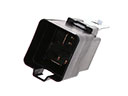 Mazda B2200 Radiator Fan Relay
 Mazda B2200 Transmission Control Module
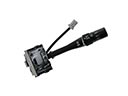 Mazda B2200 Windshield Wiper Switch