×
- Hello
- Login or Register
- Quick Links
- Live Chat
- Track Order
- Parts Availability
- RMA
- Help Center
- Contact Us
- Shop for
- Mazda Parts

My Garage
My Account
Cart
Genuine Mazda B2200 Throttle Position Sensor
TPS Switch- Select Vehicle by Model
- Select Vehicle by VIN
Select Vehicle by Model
orMake
Model
Year
Select Vehicle by VIN
For the most accurate results, select vehicle by your VIN (Vehicle Identification Number).
1 Throttle Position Sensor found

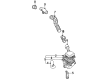
Mazda B2200 Throttle Position Sensor Part Number: F2G8-13-SL0
$238.56 MSRP: $318.15You Save: $79.59 (26%)Ships in 1-2 Business Days
Mazda B2200 Throttle Position Sensor
Looking for Throttle Position Sensor with proven quality? Choose OEM Throttle Position Sensor. Mazda designs and builds them to strict factory specs. Every piece goes through rigorous quality checks. You'll get parts that fit right and work like new. Shop our huge inventory of OEM Mazda B2200 parts. Enjoy the highly competitive prices online. Our site is your one-stop shop. Each genuine B2200 part includes a manufacturer's warranty. Buy with confidence. Our return policy is simple and hassle-free. In a rush? Choose expedited delivery at checkout. You'll love the streamlined experience from search to checkout to receiving your order.
Mazda B2200 Throttle Position Sensor Parts and Q&A
- Q:What are the functions and testing procedures of the Throttle Position Sensor on Mazda B2200?A:The Throttle Position (TP) sensor is a potentiometer which gives a signal to the PCM based on the throttle plate position, and is installed on the throttle body and attached to the throttle plate shaft. It measures the throttle plate motion and sends an electrical signal to the PCM which modulates air/fuel mixture, the timing of ignition spark, and EGR activity according to the engine load. To test Navajo models, disconnect the negative battery cable and the wiring harness on the TP sensor and with a Digital Volt-Ohmmeter (DVOM) probe designated points on sensor to ensure a constant variation in resistance as throttle shaft is rotated. Again connect the battery, set the DVOM to voltmeter, and measure the voltage at the breakout box with connections to the PCM, when the voltage does not match the value in standard, check the circuit or replace the sensor. In Pick-up and MPV models, make sure that throttle valve is shut, unplug the wiring harness and probe TP sensor terminals. Check continuity with a feeler gauge and correct the TPS. To remove it, disconnect the battery and the wiring harness, unscrew and remove the TP sensor. Installation requires attaching the sensor to the throttle body housing, screwing, reconnecting of the wiring harness, and connecting it to the negative battery cable.
Related Mazda B2200 Parts
 Mazda B2200 Fuel Sending Unit
 Mazda B2200 Ignition Switch
 Mazda B2200 Speedometer Cable
 Mazda B2200 Antenna
 Mazda B2200 Cooling Fan Relay
 Mazda B2200 Cruise Control Module
 Mazda B2200 Horn Relay
 Mazda B2200 Oil Pressure Switch
 Mazda B2200 Oxygen Sensor
 Mazda B2200 Speedometer
 Mazda B2200 Tachometer
 Mazda B2200 Wiper Linkage