×
- Hello
- Login or Register
- Quick Links
- Live Chat
- Track Order
- Parts Availability
- RMA
- Help Center
- Contact Us
- Shop for
- Mazda Parts

My Garage
My Account
Cart
Genuine Mazda Millenia Wheel Bearing
Hub Bearing- Select Vehicle by Model
- Select Vehicle by VIN
Select Vehicle by Model
orMake
Model
Year
Select Vehicle by VIN
For the most accurate results, select vehicle by your VIN (Vehicle Identification Number).
7 Wheel Bearings found
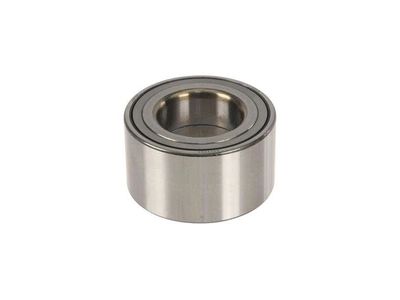
Mazda Millenia Wheel Bearing Part Number: J001-26-151
$111.83 MSRP: $149.13You Save: $37.30 (26%)Ships in 1-2 Business Days
Mazda Millenia Bearing Part Number: G569-25-155
$30.40 MSRP: $40.54You Save: $10.14 (26%)Ships in 1-2 Business Days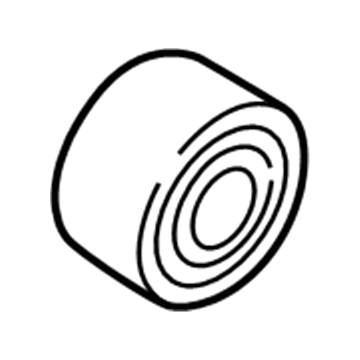
Mazda Millenia Wheel Bearing Part Number: FB01-26-151C-MV
$60.03 MSRP: $80.05You Save: $20.02 (26%)Ships in 1-2 Business DaysMazda Millenia Wheel Bearing Part Number: S10H-33-047A
$80.78 MSRP: $107.72You Save: $26.94 (26%)Ships in 1-2 Business Days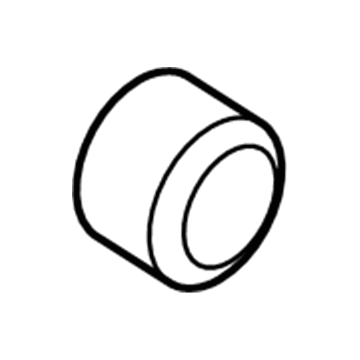
Mazda Millenia Wheel Bearing Part Number: FB01-26-151F
$161.54 MSRP: $215.43You Save: $53.89 (26%)Ships in 1-2 Business Days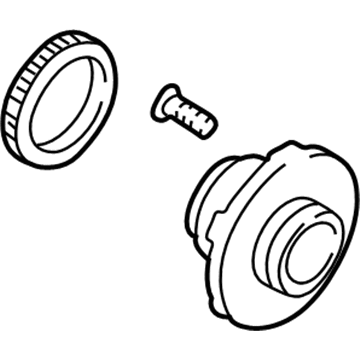
Mazda Millenia Hub Assembly Part Number: GA5S-26-15XA
$241.00 MSRP: $321.39You Save: $80.39 (26%)Ships in 1-2 Business Days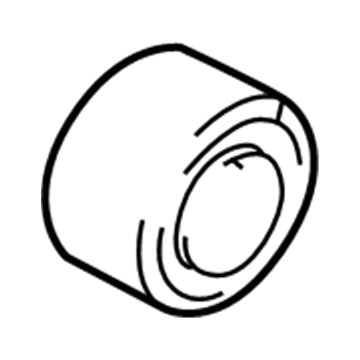
Mazda Millenia Wheel Bearing Part Number: GA2A-33-047D-MV
Mazda Millenia Wheel Bearing
Looking for Wheel Bearing with proven quality? Choose OEM Wheel Bearing. Mazda designs and builds them to strict factory specs. Every piece goes through rigorous quality checks. You'll get parts that fit right and work like new. Shop our huge inventory of OEM Mazda Millenia parts. Enjoy the highly competitive prices online. Our site is your one-stop shop. Each genuine Millenia part includes a manufacturer's warranty. Buy with confidence. Our return policy is simple and hassle-free. In a rush? Choose expedited delivery at checkout. You'll love the streamlined experience from search to checkout to receiving your order.
Mazda Millenia Wheel Bearing Parts and Q&A
- Q:How to remove and install the rear wheel bearings on Mazda Millenia?A:To remove and install the rear wheels, first loosen the lug nuts and block the front wheels, then raise and securely support the rear of the vehicle on jackstands. Remove the rear wheels, and if equipped with drum brakes, take off the drum; for disc brakes, remove the caliper and rotor assembly from the hub. Next, take off the hub dust cover, raise the staked portion of the hub retaining nut with a hammer and chisel, and discard the nut. Pull the hub and bearing assembly from the spindle, noting that the wheel bearings are not serviceable, so a new hub/bearing assembly must be installed if the bearings are bad. For installation, reverse the removal procedure and adjust the brake assembly if necessary. When working near any components of a Supplemental Restraint System, such as impact sensors or the air bag module, ensure the SRS is disabled. For vehicles without an air bag, disconnect the negative battery cable, remove the horn pad button fasteners, and detach the wire harness connectors for the horn or cruise control switches before removing the pad. Make matchmarks on the steering wheel and steering shaft, then remove the wheel using a suitable puller, and reinstall by reversing the process, torquing the steering wheel nut to 36 ft. lbs. For vehicles with an air bag, disarm the air bag, position the steering wheel straight ahead, and remove the nuts/bolts at the back of the steering Wheel Hub to tilt the air bag outward. Detach the wire harness connectors for the air bag and other switches, remove the air bag module, and matchmark the wheel to the shaft before removing the nut and using a puller. When reinstalling, reset the clock spring by ensuring the front wheels are straight, turning the clock spring all the way to the right, then back about 2.5 turns to align the marks, feed the wiring through, and install the steering wheel. Finally, torque the steering wheel nut to 36 ft. lbs. and reinstall the air bag unit, arming the system afterward.
Related Mazda Millenia Parts
 Mazda Millenia Axle Beam Mount
 Mazda Millenia Control Arm Bolt
 Mazda Millenia Crossmember Bushing
 Mazda Millenia Differential Mount
 Mazda Millenia Lateral Link
 Mazda Millenia Radius Arm
 Mazda Millenia Shock and Strut Boot
 Mazda Millenia Steering Knuckle
 Mazda Millenia Strut Housing
 Mazda Millenia Sway Bar Bushing
 Mazda Millenia Trailing Arm
 Mazda Millenia Wheel Seal