×
- Hello
- Login or Register
- Quick Links
- Live Chat
- Track Order
- Parts Availability
- RMA
- Help Center
- Contact Us
- Shop for
- Mazda Parts

My Garage
My Account
Cart
Genuine Mazda Millenia Wheel Hub Bolt
Wheel Stud- Select Vehicle by Model
- Select Vehicle by VIN
Select Vehicle by Model
orMake
Model
Year
Select Vehicle by VIN
For the most accurate results, select vehicle by your VIN (Vehicle Identification Number).
1 Wheel Hub Bolt found
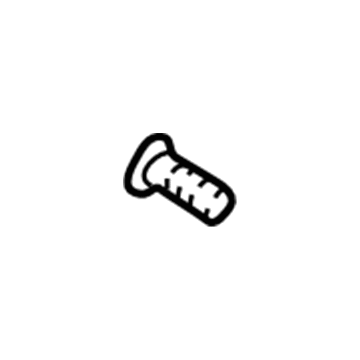
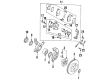
Mazda Millenia Wheel Stud Part Number: J00Y-33-062
$5.34 MSRP: $7.12You Save: $1.78 (25%)Ships in 1-2 Business Days
Mazda Millenia Wheel Hub Bolt
Looking for Wheel Hub Bolt with proven quality? Choose OEM Wheel Hub Bolt. Mazda designs and builds them to strict factory specs. Every piece goes through rigorous quality checks. You'll get parts that fit right and work like new. Shop our huge inventory of OEM Mazda Millenia parts. Enjoy the highly competitive prices online. Our site is your one-stop shop. Each genuine Millenia part includes a manufacturer's warranty. Buy with confidence. Our return policy is simple and hassle-free. In a rush? Choose expedited delivery at checkout. You'll love the streamlined experience from search to checkout to receiving your order.
Mazda Millenia Wheel Hub Bolt Parts and Q&A
- Q:How to remove and install Wheel Hub Bolt components with disc and drum brakes on Mazda Millenia?A:In order to take out and put in the components with disc brakes, one should first raise up and support the relevant end of the vehicle securely with the help of jackstands then take out the wheel. The second step is to remove the brake pads and caliper, holding the caliper aside using wire or a coat hanger. Lift off the rotor, remove the outer Wheel Bearing and be careful in handling the wheel bearing. Hold the rotor in place with press bars and punch the stud out with an arbor press; no press available, the old stud may be punched out with a blunt drift taking care so as not to damage the rotor. To install it, clean the stud hole with the wire brush and begin installing the new stud with a hammer and drift pin without any lubricant or thread sealer. Install the stud with either a press or, in the absence of a press, flat washers and a lug nut to draw the stud until it is firmly seated then remove the lug nut and the washers. Install the rotor and the wheel bearings, the brake caliper and pads. Lastly, install the wheel, take out the jackstands and lower the vehicle and screw the lug nuts until the correct amount of torque. In the case of the drum brakes, lift the car and place it in jackstands and then remove the wheel and the brake drum. When necessary, take off the brake shoes. Press the stud of the axle flange with a large C-clamp and socket and apply the liquid soap on the serrated surface of the new stud and insert it into the hole. Installation requires placing flat washers on studs and screwing the lug nut, gripping the lug flange and screwing it in to ensure the stud is fully seated and then loosening the lug nut and the washers. Install the brake shoes back in place then the brake drum, and then the wheel. Lastly, take off jackstands and lower the car and screw the lug nuts to the correct torque.
Related Mazda Millenia Parts
 Mazda Millenia ABS Pump And Motor Assembly
 Mazda Millenia ABS Sensor
 Mazda Millenia Axle Bearing Lock Rings
 Mazda Millenia Axle Shaft Seal
 Mazda Millenia Brake Booster Vacuum Hose
 Mazda Millenia Brake Caliper
 Mazda Millenia Brake Line
 Mazda Millenia Hydraulic Hose
 Mazda Millenia Speed Sensor
 Mazda Millenia Spindle Nut
 Mazda Millenia Wheel Hub
 Mazda Millenia Wheel Stud