×
- Hello
- Login or Register
- Quick Links
- Live Chat
- Track Order
- Parts Availability
- RMA
- Help Center
- Contact Us
- Shop for
- Mazda Parts

My Garage
My Account
Cart
Genuine Mazda MX-5 Miata Battery Cables
Battery Cable- Select Vehicle by Model
- Select Vehicle by VIN
Select Vehicle by Model
orMake
Model
Year
Select Vehicle by VIN
For the most accurate results, select vehicle by your VIN (Vehicle Identification Number).
2 Battery Cables found

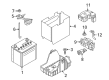
Mazda MX-5 Miata Ground Cable Part Number: NA1J-67-EW0
$15.01 MSRP: $20.01You Save: $5.00 (25%)Ships in 1-2 Business Days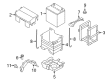
Mazda MX-5 Miata Negative Cable Part Number: NE51-67-260C
$32.09 MSRP: $42.79You Save: $10.70 (26%)Ships in 1-2 Business Days
Mazda MX-5 Miata Battery Cables
Looking for Battery Cables with proven quality? Choose OEM Battery Cables. Mazda designs and builds them to strict factory specs. Every piece goes through rigorous quality checks. You'll get parts that fit right and work like new. Shop our huge inventory of OEM Mazda MX-5 Miata parts. Enjoy the highly competitive prices online. Our site is your one-stop shop. Each genuine MX-5 Miata part includes a manufacturer's warranty. Buy with confidence. Our return policy is simple and hassle-free. In a rush? Choose expedited delivery at checkout. You'll love the streamlined experience from search to checkout to receiving your order.
Mazda MX-5 Miata Battery Cables Parts and Q&A
- Q: How should you periodically inspect and replace battery cables to ensure proper engine performance on Mazda MX-5 Miata?A:Periodically check the full length of every battery cable due to any damage, broken or burnt insulation, and corrosion because of bad connections starting difficulties may arise and engine performance deteriorates. Inspect the cable-to-terminal connections cracks, loose strands of wire, or corrosion; white, fluffy-looking deposits under the insulation are evidence of corrosion, and require replacement. When disconnection of cables, always ensure that the negative cable is first disconnected and lastly connected to prevent short circuiting the battery. Unconnect old cables to the battery, follow them to their opposite ends and remove them by loosening them off the starter solenoid and ground terminals, and tracing their route so as to install them properly. Where possible, bring the such old cables with you so that you get them in the same parts since the positive cables are usually red and bigger whereas ground cables are usually black and smaller. Wipe the threads of the solenoid or ground contact with a wire brush to eliminate rust and corrosion and a light smear of battery terminal corrosion inhibitor or petroleum jelly to inhibit future corrosion. Connect the cable with the solenoid or ground connection and screw the mounting nut or bolt. Make sure that the new cable should not stretch and you should first connect the positive cable and then the negative cable before you tie the new cable to the battery.
Related Mazda MX-5 Miata Parts
 Mazda MX-5 Miata A/C Clutch
 Mazda MX-5 Miata A/C Hose
 Mazda MX-5 Miata Battery Hold Downs
 Mazda MX-5 Miata Car Key
 Mazda MX-5 Miata Drive Belt
 Mazda MX-5 Miata Fuel Cap
 Mazda MX-5 Miata Fuse Box
 Mazda MX-5 Miata Headlight Relay
 Mazda MX-5 Miata Heater Core
 Mazda MX-5 Miata Windshield Wiper Motors
Browse by Year
2023 Battery Cables 2022 Battery Cables 2021 Battery Cables 2020 Battery Cables 2019 Battery Cables 2018 Battery Cables 2017 Battery Cables 2016 Battery Cables 2015 Battery Cables 2014 Battery Cables 2013 Battery Cables 2012 Battery Cables 2011 Battery Cables 2010 Battery Cables 2009 Battery Cables 2008 Battery Cables 2007 Battery Cables 2006 Battery Cables