×
- Hello
- Login or Register
- Quick Links
- Live Chat
- Track Order
- Parts Availability
- RMA
- Help Center
- Contact Us
- Shop for
- Mazda Parts

My Garage
My Account
Cart
Genuine Mazda MX-6 EGR Valve
Emissions EGR Valve- Select Vehicle by Model
- Select Vehicle by VIN
Select Vehicle by Model
orMake
Model
Year
Select Vehicle by VIN
For the most accurate results, select vehicle by your VIN (Vehicle Identification Number).
13 EGR Valves found
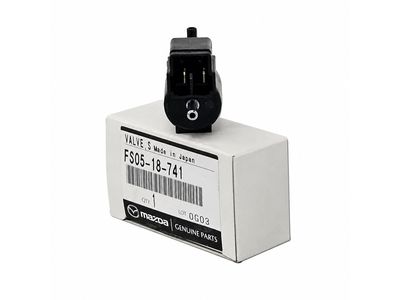
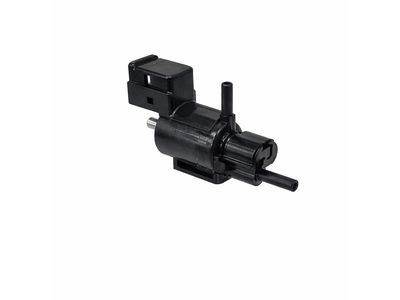

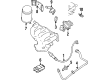
Mazda MX-6 Valve Part Number: FS05-18-741
$96.56 MSRP: $128.78You Save: $32.22 (26%)Ships in 1-2 Business Days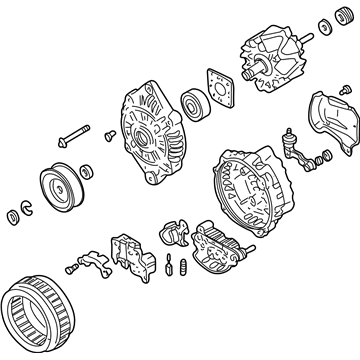
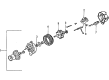
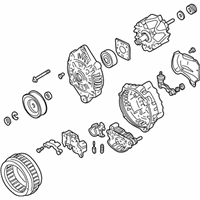
Mazda MX-6 Alternator Part Number: B6BF-20-300-9U
$291.26 MSRP: $388.42You Save: $97.16 (26%)Ships in 1-2 Business Days
Mazda MX-6 Three Way Valve Part Number: FE70-18-741A
$99.25 MSRP: $132.36You Save: $33.11 (26%)Ships in 1-2 Business Days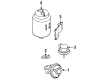
Mazda MX-6 Solenoid Valve Part Number: KL05-18-740
$107.15 MSRP: $142.89You Save: $35.74 (26%)Ships in 1-2 Business DaysMazda MX-6 Solenoid Valve Part Number: FS05-18-740C
$235.58 MSRP: $314.17You Save: $78.59 (26%)Ships in 1-2 Business DaysMazda MX-6 Solenoid Valve Part Number: KL19-18-74X
$272.58 MSRP: $363.51You Save: $90.93 (26%)Ships in 1-2 Business DaysMazda MX-6 EGR Valve Part Number: KLY1-13-SJ0
$320.10 MSRP: $426.88You Save: $106.78 (26%)Ships in 1-2 Business Days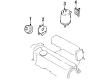
Mazda MX-6 EGR Valve Part Number: F203-20-300B-9U
$333.91 MSRP: $445.30You Save: $111.39 (26%)Ships in 1-2 Business DaysMazda MX-6 EGR Valve Part Number: FS05-20-300-9U
$25.30 MSRP: $33.21You Save: $7.91 (24%)Ships in 1-2 Business DaysMazda MX-6 EGR Valve Part Number: KL01-20-300C-9U
Mazda MX-6 Solenoid Part Number: KL01-18-740B
Mazda MX-6 EGR Valve Part Number: FS56-20-300A-9U
Mazda MX-6 EGR Valve Part Number: F201-20-300A-9U
Mazda MX-6 EGR Valve
Looking for EGR Valve with proven quality? Choose OEM EGR Valve. Mazda designs and builds them to strict factory specs. Every piece goes through rigorous quality checks. You'll get parts that fit right and work like new. Shop our huge inventory of OEM Mazda MX-6 parts. Enjoy the highly competitive prices online. Our site is your one-stop shop. Each genuine MX-6 part includes a manufacturer's warranty. Buy with confidence. Our return policy is simple and hassle-free. In a rush? Choose expedited delivery at checkout. You'll love the streamlined experience from search to checkout to receiving your order.
Mazda MX-6 EGR Valve Parts and Q&A
- Q:What are the distinct checking and servicing methods required for emissions control systems,EGR Vacuum Solenoid and EGR Valve in fuel injected and turbocharged engines on Mazda MX-6?A:Although the emissions control systems for both fuel injected and turbocharged engines perform the same function, they require different checks and servicing. Due to the link between these systems to the fuel, exhaust and engine electrical systems, they must be checked while handling emissions-related issues. The air control valve and reed valve make up the air injection system, which pulls air into the exhaust manifold, to lower hydrocarbon emissions. The process of checking includes testing of idle airflow at idle and higher RPMs and checking the operation of the air control and reed valves, which may need to be replaced. The charcoal canister absorbs fuel vapors from the evaporative emissions control system to utilize for engine operation. The vacuum level in several locations and the correct operation of valves are checked as part of its functionality. The PCV valve can be removed from any warm Idle engine to confirm the operation of the positive crankcase ventilation system. This will be evidenced by a change in engine Idle speed. The exhaust gas recirculation (EGR) system routes exhaust gas into the intake manifold to reduce NOx emissions. Most EGR checks will focus on the vacuum hose and valve. All of the components of these systems can be carefully disconnected and reassembled after ensuring every fixture and itself has perfect sealing.
- Q:What is the location and function of the EGR valve, and how can you check its condition on Mazda MX-6?A:The EGR valve is located on the intake side, beside the carburetor and problems with this emissions system can easily be caused by a stagnant or rusted EGR valve. To test the valve, it is necessary to make certain that the engine is free of heat to avoid burns and push on the under EGR valve diaphragm with moderately force, it is supposed to go up and down in the housing. When the diaphragm is difficult to move, or needs much effort to move, then a new EGR valve would be recommended and when in doubt, check the movement of the current valve against that of a new one.
Related Mazda MX-6 Parts
 Mazda MX-6 Catalytic Converter
 Mazda MX-6 EGR Tube
 Mazda MX-6 EGR Vacuum Solenoid
 Mazda MX-6 EGR Valve Gasket
 Mazda MX-6 Exhaust Hanger
 Mazda MX-6 Exhaust Heat Shield
 Mazda MX-6 Exhaust Manifold
 Mazda MX-6 Exhaust Resonator
 Mazda MX-6 Muffler
 Mazda MX-6 Muffler Strap
 Mazda MX-6 PCV Valve
 Mazda MX-6 Vapor Canister