×
- Hello
- Login or Register
- Quick Links
- Live Chat
- Track Order
- Parts Availability
- RMA
- Help Center
- Contact Us
- Shop for
- Mazda Parts

My Garage
My Account
Cart
Genuine Mazda RX-7 Brake Master Cylinder
- Select Vehicle by Model
- Select Vehicle by VIN
Select Vehicle by Model
orMake
Model
Year
Select Vehicle by VIN
For the most accurate results, select vehicle by your VIN (Vehicle Identification Number).
5 Brake Master Cylinders found

Mazda RX-7 Master Cylinder Part Number: FA66-43-400
$294.44 MSRP: $392.67You Save: $98.23 (26%)Ships in 1-2 Business Days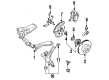
Mazda RX-7 Master Cylinder Part Number: FB08-43-400R-0C
Mazda RX-7 Master Cylinder Part Number: FB02-43-400R-0D
Mazda RX-7 Master Cylinder Part Number: FA07-43-400
Mazda RX-7 Master Cylinder Part Number: F065-43-400R-0B
Mazda RX-7 Brake Master Cylinder
The Mazda RX-7 Brake Master Cylinder transforms the push of the driver into pressurized brake fluid, which enables the lightweight Mazda rotary automobile to have consistent and assured brake force. With two pistons made of cast iron or aluminum, it fits in a precisely machined bore and moves forward as a pushrod from the pedal or vacuum booster moves against the pistons, forcing fluid into two separate circuits, such that in the event of a failure on one side the other will still slow the vehicle. Initial versions of the Mazda sports car were heavy cast iron-bodied, carrying a single bail-secured metal reservoir with an integral topmost cap, whereas later versions of the RX-7 applied lighter aluminum bodies with a removable plastic reservoir that was sealed with O-rings and closed with screw-on caps. In spite of these material and reservoir alterations, the two types of the Brake Master Cylinder are based on cup-type seals, return springs and small ports which allow the fluid to flow freely and refill the bore when the pedal is released so that air does not enter the system and make the system responsive. The component is typically installed in front of the power booster on the firewall, which will reduce the linkage length and enhance the pedal feel. When handling fluid dampness where the unit and booster are connected, owners should also be aware that it may result in leaking end seals and corrosion of the inner parts due to the presence of moisture, causing a low pedal and longer stops. It is important to keep the fluid in the reservoir clean as it significantly increases the Brake Master Cylinder service life of the car and ensures confident control during performance driving in every Mazda car.
Looking for Brake Master Cylinder with proven quality? Choose OEM Brake Master Cylinder. Mazda designs and builds them to strict factory specs. Every piece goes through rigorous quality checks. You'll get parts that fit right and work like new. Shop our huge inventory of OEM Mazda RX-7 parts. Enjoy the highly competitive prices online. Our site is your one-stop shop. Each genuine RX-7 part includes a manufacturer's warranty. Buy with confidence. Our return policy is simple and hassle-free. In a rush? Choose expedited delivery at checkout. You'll love the streamlined experience from search to checkout to receiving your order.
Mazda RX-7 Brake Master Cylinder Parts and Q&A
- Q:How can the Brake Master Cylinder be serviced, and what steps should be taken to ensure proper installation and operation on Mazda RX-7?A:Get all the fluid out of the differential and then clean the parts, as cleaning will not be easy when the differential is still assembled; the gears in particular will be required to be clean and dry. Check anything that has been damaged in visible ways, as broken or chipped teeth in the gears, and the bearings for roughness of travel, wear or damage. Look at the front oil seal at the point where it connects with the propeller shaft and presence of oil will prove the failure of the pinion oil seal. Red lead or engineer blue that can be found in most auto supply stores can be used to check the tooth contact between the ring gear and pinion gear. Brush a little red or blue engineer paint on the two sides of some half a dozen or eight teeth of the ring gear, and then turn the ring gear itself a few times forward and back. Look at the teeth pattern, with heel contact showing that the drive pinion is too far and thus a spacer is needed to bring it nearer and toe contact indicating that the drive pinion is too near and thus pinion spacers are required to move the pinion. The difficulty in achieving the right spare parts, the complexity of the procedures, and the necessity of the use of the special tools makes it reasonable to send the home mechanic to a Mazda dealership or a professional auto repair shop doing the same job to have the differential assembly and the information gathered during the procedures.
- Q:What steps should be followed for a Brake Master Cylinder overhaul on Mazda RX-7?A:Before disassembly, it should be provided with a master cylinder, overhaul kit that will include all the parts needed to get a replacement. Start with depleting too much fluid in the master cylinder and reservoir. Take out the fluid level sensor which is on the right side of the reservoir by pinching the tab and pulling it out together with the top and the float. Uncouple the reservoir with the master cylinder by disconnecting its two bushings. Then remove the joint bolt, the check valve and the spring at the bottom of the master cylinder; taking note of the position of the check valve. The rest of the parts will then be removed off of the cylinder bore, the stop ring being the first part, followed by the stop washer, using a screwdriver. Reversal of the cylinder to take off the primary piston assembly and spring. With the secondary piston assembly, use a screwdriver to push it into the secondary piston assembly, unscrew the stop bolt at the top and connect the guide pin into the stop bolt opening, and release the pressure to relieve the assembly without damaging the piston cup, compressing air can be used. Take out the secondary piston spring and clean all the parts in clean alcohol or brake fluid, without using gasoline or kerosene and blow them off with compressed air where possible. Check the bore of the cylinder and the pistons, examining them, and removing slight marks with a hone. Measure the clearance between the cylinder bore and the pistons with a feeler gauge or a micrometer and make sure that there is not greater than 0.006 in (0.15 mm) of space. Ensure ports are clear and are not blocked to ensure that the fluid flows. Wipe everything off, coated the inside of the cylinder with new brake fluid, dipped the pistons and cups into clean brake fluid and fitted the secondary and primary cups to the pistons. Install the guide pin into the stop bolt hole, push the spring and secondary piston assembly into the cylinder, take out the guide pin but do not sacrifice pressure and put in the stop bolt and washer. The lubricated primary piston assembly and spring are then installed next and then the stop washer and stop ring. Lastly, insert the spring and check valve into the cylinder in their usual positions, and attach the joint bolt behind the check valve to a torque of 43 to 51 ft-lb (6.0 to 7.0 m-kg) and make sure the piston cups do not block the compensating ports before fitting the reservoir bushings and assembly.
Related Mazda RX-7 Parts
 Mazda RX-7 Axle Shaft Seal
 Mazda RX-7 Brake Booster
 Mazda RX-7 Brake Booster Vacuum Hose
 Mazda RX-7 Brake Caliper
 Mazda RX-7 Brake Drum
 Mazda RX-7 Brake Dust Shields
 Mazda RX-7 Brake Line
 Mazda RX-7 Brake Master Cylinder Repair Kit
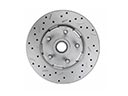 Mazda RX-7 Brake Rotor
 Mazda RX-7 Hydraulic Hose
 Mazda RX-7 Parking Brake Cable
 Mazda RX-7 Wheel Hub