×
- Hello
- Login or Register
- Quick Links
- Live Chat
- Track Order
- Parts Availability
- RMA
- Help Center
- Contact Us
- Shop for
- Mazda Parts

My Garage
My Account
Cart
Genuine Mazda RX-7 Fuel Injector
Gas Injector- Select Vehicle by Model
- Select Vehicle by VIN
Select Vehicle by Model
orMake
Model
Year
Select Vehicle by VIN
For the most accurate results, select vehicle by your VIN (Vehicle Identification Number).
4 Fuel Injectors found
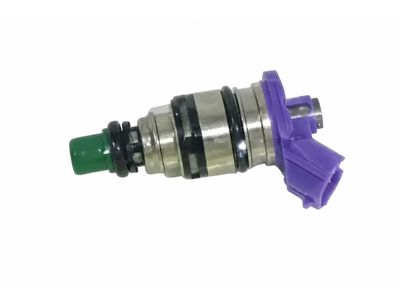
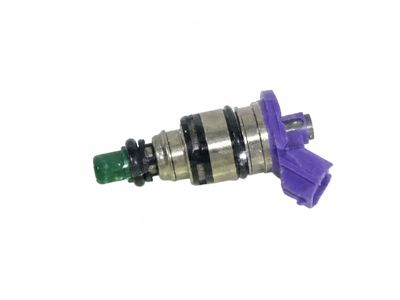
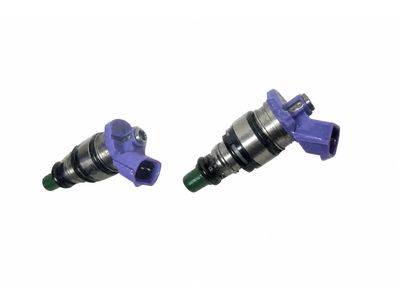
Mazda RX-7 Injector Part Number: N3A2-13-250
$290.98 MSRP: $388.04You Save: $97.06 (26%)Ships in 1-2 Business Days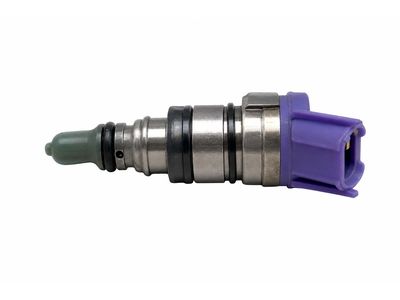
Mazda RX-7 Injector Part Number: N3A1-13-250
$290.98 MSRP: $388.04You Save: $97.06 (26%)Ships in 1-2 Business Days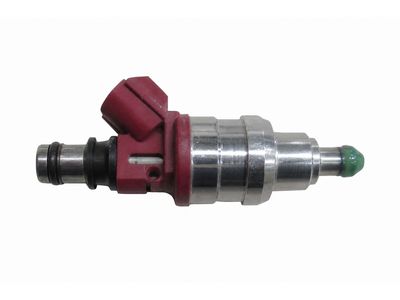
Mazda RX-7 Injector Part Number: N37013250

Mazda RX-7 Injector Part Number: N350-13-250
Mazda RX-7 Fuel Injector
Looking for Fuel Injector with proven quality? Choose OEM Fuel Injector. Mazda designs and builds them to strict factory specs. Every piece goes through rigorous quality checks. You'll get parts that fit right and work like new. Shop our huge inventory of OEM Mazda RX-7 parts. Enjoy the highly competitive prices online. Our site is your one-stop shop. Each genuine RX-7 part includes a manufacturer's warranty. Buy with confidence. Our return policy is simple and hassle-free. In a rush? Choose expedited delivery at checkout. You'll love the streamlined experience from search to checkout to receiving your order.
Mazda RX-7 Fuel Injector Parts and Q&A
- Q:How to test and replace the fuel pump, fuel pressure regulator, fuel injector, pulsation damper, and atmospheric pressure sensor, and How to adjust the idle speed on Mazda RX-7?A:To test the fuel pump, disconnect the negative battery cable, and wrap a cloth around the main fuel hose at its connection to the metal pipe. Release the clamp on the hose, pull off the hose, and attach a fuel pressure gauge on the end. Reattach the negative battery cable. Use a jumper wire to connect the fuel pump short circuit connector terminals. Turn the ignition switch on. The pump must run and the fuel pressure between 49.8 to 71.1 psi. If not, the pump requires replacement. To check the regulator, repeat the earlier steps to disconnect the negative battery cable and remove the hose. Attach a fuel pressure gauge using the T fitting. Reconnect the battery and crank the engine after that, remove the vacuum hose from the pressure regulator control valve, the fuel pressure at idle should be about 36.97 psi, after reconnecting the vacuum hose it should drop to 28.44 psi, replace the regulator if not. To take out and fit the pressure regulator, cover the starter motor, remove the air cleaner to throttle chamber duct and disconnect the dynamic chamber throttle chamber and intake manifold. Detach the vacuum and return hoses, undo the regulator from the delivery pipe, then reassemble in reverse order and check for leaking when the fuel pump runs. An injector may be bad if its sound doesn't register. To check, place a stethoscope or screwdriver against the injector while the engine is idling. No sound means check the wires and continuity. Also, check the main fusible link. Finally, make sure the main relay clicks when power is applied. The injectors should be checked for resistance after removal. The value should be anywhere between 1.5 and 3 ohms. It is recommended to get a leakage and volume check done at a dealer service department. The air cleaner duct is removed, hoses and wire harness connectors are disconnected. The delivery pipe is unbolted, and the injectors are lifted out as a set. New insulators, grommets and O-rings are used on installation. Put your finger over the pulsation damper while the engine is idling to check if there is any pulsation. To measure the atmospheric pressure sensor, connect a voltmeter across D and ground the other terminal. It should be 4 ± 0.5 volts at sea level and 3 ± 0.5 volts at a higher altitude. Before adjusting the idling speed, make sure that all accessories are off; the fuel tank cap is removed and a tachometer is connected. The engine must be switched on until its normal operating temperature and carry out the throttle sensor check-up and adjustment. Unplug the valve and vacuum solenoid valve connector. Adjust the air screw until the idle speed is 800 rpm and replace the blind cap. Unless the variable resistor is replaced, idle mixture adjustments are normally unnecessary, and it's a good idea to have a dealer service department perform the adjustment in order that emission compliance is maintained.
Related Mazda RX-7 Parts
 Mazda RX-7 Turbocharger
 Mazda RX-7 Accelerator Cable
 Mazda RX-7 Air Filter
 Mazda RX-7 Air Filter Box
 Mazda RX-7 Fuel Filler Neck
 Mazda RX-7 Fuel Hose
 Mazda RX-7 Fuel Pressure Regulator
 Mazda RX-7 Fuel Rail
 Mazda RX-7 Idle Control Valve
 Mazda RX-7 Intake Manifold Temperature Sensor
 Mazda RX-7 Throttle Cable
 Mazda RX-7 Transmission Sensor