×
- Hello
- Login or Register
- Quick Links
- Live Chat
- Track Order
- Parts Availability
- RMA
- Help Center
- Contact Us
- Shop for
- Mazda Parts

My Garage
My Account
Cart
Genuine Mazda Millenia Brake Light Switches
Stop Light Switches- Select Vehicle by Model
- Select Vehicle by VIN
Select Vehicle by Model
orMake
Model
Year
Select Vehicle by VIN
For the most accurate results, select vehicle by your VIN (Vehicle Identification Number).
2 Brake Light Switches found

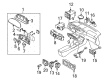
Mazda Millenia Parking Brake Warning Switch Part Number: TA01-66-450
$9.05 MSRP: $12.07You Save: $3.02 (26%)Ships in 1-2 Business DaysMazda Millenia Stoplamp Switch Part Number: T001-66-490
Mazda Millenia Brake Light Switches
Looking for Brake Light Switches with proven quality? Choose OEM Brake Light Switches. Mazda designs and builds them to strict factory specs. Every piece goes through rigorous quality checks. You'll get parts that fit right and work like new. Shop our huge inventory of OEM Mazda Millenia parts. Enjoy the highly competitive prices online. Our site is your one-stop shop. Each genuine Millenia part includes a manufacturer's warranty. Buy with confidence. Our return policy is simple and hassle-free. In a rush? Choose expedited delivery at checkout. You'll love the streamlined experience from search to checkout to receiving your order.
Mazda Millenia Brake Light Switches Parts and Q&A
- Q: How to remove and install brake light switches on Mazda Millenia?A:The first step to take off as well as to fit the brake light switch is to disconnect the negative battery cable and the stop lamp switch electrical harness connector. Unscrew and loosen the locknut that connected the switch to the bracket, and remove the switch. Installation requires the new switch and locknut, where, when fitting, the locknut should be tightened but not too tight. Install the brake light switch in such a way that the gap between the external cover of the switch and the pedal is 0.02-0.04 in. (0.6-1.0mm), and that the switch plunger is touching the pedal to hold the brake lights off. The pedal is pushed forward and the plunger lengthens and the switch is closed and the stop lights are on. Keep the switch in place as the locknut is tightened and then attach the wiring to the switch. To test its functioning, where the ignition key is left in the ON position, but the engine is not started, have someone monitor the brake lights as you come to press the brake pedal; the lights should come on as the pedal passes through the free-play position. Turn the switch off or on when necessary so that the brake lights do not flicker with the shakiness of the pedal in road bumps.
Related Mazda Millenia Parts
 Mazda Millenia Air Intake Hose
 Mazda Millenia Axle Beam Mount
 Mazda Millenia Coolant Reservoir
 Mazda Millenia Ignition Lock Cylinder
 Mazda Millenia Oil Pan Gasket
 Mazda Millenia Thermostat Gasket
 Mazda Millenia Throttle Body
 Mazda Millenia Valve Stem Oil Seal
 Mazda Millenia Water Pump Gasket
 Mazda Millenia Wheel Bearing