×
- Hello
- Login or Register
- Quick Links
- Live Chat
- Track Order
- Parts Availability
- RMA
- Help Center
- Contact Us
- Shop for
- Mazda Parts

My Garage
My Account
Cart
Genuine Mazda MPV Automatic Transmission Filter
AT Filter- Select Vehicle by Model
- Select Vehicle by VIN
Select Vehicle by Model
orMake
Model
Year
Select Vehicle by VIN
For the most accurate results, select vehicle by your VIN (Vehicle Identification Number).
2 Automatic Transmission Filters found
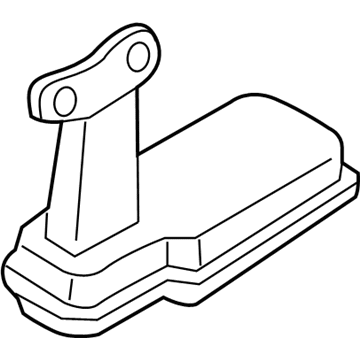
Mazda MPV Filter Part Number: FP01-21-500
$75.00 MSRP: $100.02You Save: $25.02 (26%)Ships in 1-2 Business Days
Mazda MPV Filter Part Number: BU01-19-815
$32.24 MSRP: $42.98You Save: $10.74 (25%)Ships in 1-2 Business Days
Mazda MPV Automatic Transmission Filter
Looking for Automatic Transmission Filter with proven quality? Choose OEM Automatic Transmission Filter. Mazda designs and builds them to strict factory specs. Every piece goes through rigorous quality checks. You'll get parts that fit right and work like new. Shop our huge inventory of OEM Mazda MPV parts. Enjoy the highly competitive prices online. Our site is your one-stop shop. Each genuine MPV part includes a manufacturer's warranty. Buy with confidence. Our return policy is simple and hassle-free. In a rush? Choose expedited delivery at checkout. You'll love the streamlined experience from search to checkout to receiving your order.
Mazda MPV Automatic Transmission Filter Parts and Q&A
- Q:How should the Automatic Transmission Filter be replaced along with the transmission fluid at specified intervals on Mazda MPV?A:Transmission fluid should be emptied and replaced at the given intervals, where the process can only be implemented after the engine has cooled properly down because the fluid is hot even after the engine has driven. Purchase the required transmission fluid and new filter beforehand, the tools required, including jackstands to hold the vehicle, a drain pan, newspapers, and clean rags. Lift the car with the jackstands and place a drain pan under the vehicle, loosen the front and side pan mounting bolts. To drain the fluid, loosen the rear pan bolts about four turns, and take care to loosen the transmission pan with a screwdriver to allow fluid to be free to drain by letting the pan dangle. Take out the rest of the bolts, pan and gasket and clean the gasket surface of the transmission so that all the trace of the old gasket and the sealant is removed. Empty the transmission pan, wipe it out with solvent, and dry it with compressed air, taking care to scrape out all metal filings of the magnet. To attain electronically controlled models, the filter in the mount within the transmission is removed by removing the bolts and turning the fluid filter out of the bracket. Install a new filter by screwing the bolts firmly, and the gasket surface of the transmission pan is clean and then a new gasket can be installed. Slide the pan against the transmission and add the bolts, connecting each one with a certain rotation to the right torque and not overtighten. Reduce the car and pour the required fluid via the filler tube. The engine should be run on fast idle, not raced, this time with transmission in Park and the parking brake on and the gear selector in each range and back to Park, checking the fluid level. Lastly, during the initial few trips check under the vehicle to check on leaks.
Related Mazda MPV Parts
 Mazda MPV Automatic Transmission Shift Levers
 Mazda MPV Clutch Release Bearing
 Mazda MPV Flywheel
 Mazda MPV Flywheel Ring Gear
 Mazda MPV Manual Transmission Extension Housing Seal
 Mazda MPV Pilot Bearing
 Mazda MPV Shift Cable
 Mazda MPV Torque Converter
 Mazda MPV Transfer Case Gasket
 Mazda MPV Transfer Case Seal
 Mazda MPV Transmission Gasket
 Mazda MPV Transmission Pan
Browse by Year
2006 Automatic Transmission Filter 2005 Automatic Transmission Filter 2004 Automatic Transmission Filter 2003 Automatic Transmission Filter 2002 Automatic Transmission Filter 1995 Automatic Transmission Filter 1994 Automatic Transmission Filter 1993 Automatic Transmission Filter 1992 Automatic Transmission Filter 1991 Automatic Transmission Filter 1990 Automatic Transmission Filter