×
- Hello
- Login or Register
- Quick Links
- Live Chat
- Track Order
- Parts Availability
- RMA
- Help Center
- Contact Us
- Shop for
- Mazda Parts

My Garage
My Account
Cart
Genuine Mazda MPV Pilot Bearing
Clutch Pilot Bearing- Select Vehicle by Model
- Select Vehicle by VIN
Select Vehicle by Model
orMake
Model
Year
Select Vehicle by VIN
For the most accurate results, select vehicle by your VIN (Vehicle Identification Number).
1 Pilot Bearing found
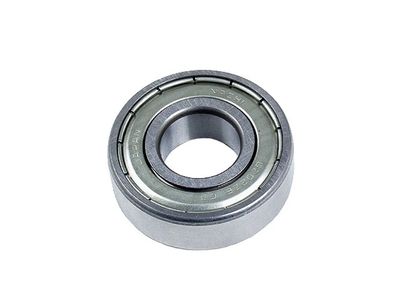
Mazda MPV Bearings Part Number: F801-11-303
$20.44 MSRP: $27.26You Save: $6.82 (26%)Ships in 1-2 Business Days
Mazda MPV Pilot Bearing
Looking for Pilot Bearing with proven quality? Choose OEM Pilot Bearing. Mazda designs and builds them to strict factory specs. Every piece goes through rigorous quality checks. You'll get parts that fit right and work like new. Shop our huge inventory of OEM Mazda MPV parts. Enjoy the highly competitive prices online. Our site is your one-stop shop. Each genuine MPV part includes a manufacturer's warranty. Buy with confidence. Our return policy is simple and hassle-free. In a rush? Choose expedited delivery at checkout. You'll love the streamlined experience from search to checkout to receiving your order.
Mazda MPV Pilot Bearing Parts and Q&A
- Q:How to inspect and replace the clutch pilot bearing on Mazda MPV?A:The clutch pilot bearing gets pressed into the back of the crankshaft and is pre-greased at the factory. It mainly supports the front of the transmission input shaft. It should be checked any time the clutch component is removed from the engine. If its condition is in doubt due to lack of access, it should be replaced. Steps that do not apply if removed the engine from the vehicle. First, remove the gearbox and clutch parts. Then check the bearing for signs of wear, scoring, grease deficiency, dryness or damage. The recess can be illuminated with a torch and the bearing should be turned while an axial force is applied; if it sticks, feels rough or has high resistance, it should be replaced. The bearing can be removed with a special puller and slide hammer or a solid steel bar slightly smaller in diameter than the bearing can be used. Make sure the bar sits tightly in the bearing. Then pack the bearing and the area behind it with thick grease to exclude the air. Place the bar into the bearing bore and strike with a hammer to force grease behind the bearing forcing it out. After extracting the bearing, clean the recess in the crankshaft. To fit the new bearing, lubricate lightly its outside surface and drive it into the recess till flush. Lastly, you'll need to reinstall the clutch components, transmission, and any other components removed during service. Be sure all fasteners are tightened correctly.
Related Mazda MPV Parts
 Mazda MPV Automatic Transmission Filter
 Mazda MPV Automatic Transmission Shift Levers
 Mazda MPV Clutch Fork
 Mazda MPV Clutch Release Bearing
 Mazda MPV Clutch Slave Cylinder
 Mazda MPV Clutch Slave Repair Kit
 Mazda MPV Flywheel
 Mazda MPV Flywheel Ring Gear
 Mazda MPV Manual Transmission Extension Housing Seal
 Mazda MPV Shift Cable
 Mazda MPV Transmission Gasket
 Mazda MPV Transmission Pan