×
- Hello
- Login or Register
- Quick Links
- Live Chat
- Track Order
- Parts Availability
- RMA
- Help Center
- Contact Us
- Shop for
- Mazda Parts

My Garage
My Account
Cart
Genuine Mazda RX-7 Clutch Disc
Friction Disc- Select Vehicle by Model
- Select Vehicle by VIN
Select Vehicle by Model
orMake
Model
Year
Select Vehicle by VIN
For the most accurate results, select vehicle by your VIN (Vehicle Identification Number).
2 Clutch Discs found
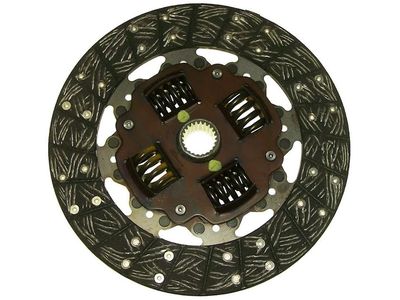
Mazda RX-7 Disc Part Number: N315-16-460D
$167.48 MSRP: $223.34You Save: $55.86 (26%)Ships in 1-2 Business Days
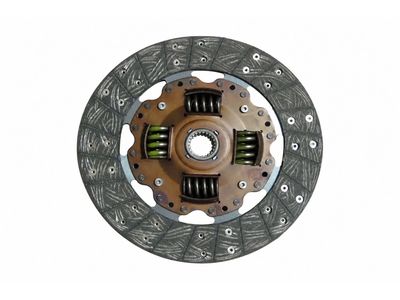
Mazda RX-7 Disc Part Number: N310-16-460B-9U
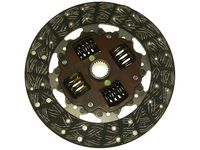
Mazda RX-7 Clutch Disc
Looking for Clutch Disc with proven quality? Choose OEM Clutch Disc. Mazda designs and builds them to strict factory specs. Every piece goes through rigorous quality checks. You'll get parts that fit right and work like new. Shop our huge inventory of OEM Mazda RX-7 parts. Enjoy the highly competitive prices online. Our site is your one-stop shop. Each genuine RX-7 part includes a manufacturer's warranty. Buy with confidence. Our return policy is simple and hassle-free. In a rush? Choose expedited delivery at checkout. You'll love the streamlined experience from search to checkout to receiving your order.
Mazda RX-7 Clutch Disc Parts and Q&A
- Q:How to properly install a clutch disc and pressure plate on a flywheel on Mazda RX-7?A:Identify the position of the mark and two holes that will be reamed on the flywheel surface. Install clutch disc and pressure plate by orienting the indication hole with the two shanked bolts, and insert them to ensure that the pressure plate is correctly installed to the flywheel by snapping all the bolts. Clamp the disc of the clutch with a centering tool or a spare input shaft of the transmission making sure that it fits correctly to install the transmission. Ensure that the disc of the clutch fits in with the greater boss and the retaining plate facing off the flywheel. Tighten all cover bolts gradually in a diagonal manner until the correct torque, that is 13 to 20 ft-lb (1.8 to 2.7 m-kg) is reached.
- Q:What should be examined and checked in the clutch disc to ensure proper function and identify the need for replacement on Mazda RX-7?A:Inspect the surface which the pressure plate is in contact with the clutch disc (is it smooth, free of scoring, gouging or warping) and inspect the pressure plate cover and fingers; any defects in the pressure plate assembly will require replacement as a complete assembly. Check the lining wear of the clutch disc (at least 0.012 in (0.3 mm) of lining must be available above the rivet heads); and loose or broken rivets or springs should be checked; suspect there is question of the quality of the clutch disc, change it. Check the flywheel surface, is there a groove of rivets, burnt, or scored, slight damage can be repaired in a lathe, severe damage must be replaced, and the teeth of the ring gear must be in good condition. Verify the release fork is not cracked or bent, verify the release bearing freely and silently turns, is pre-lubricated and must not be washed in solvents and a new release bearing must be used each time a new clutch is installed. In case of finding oil on the clutch parts determine the source and remove it because oil on the center of the flywheel means that the rear oil seal of the eccentric shaft is faulty whereas oil on the back of the clutch gears could be an indication that the transmission input shaft seal needs replacement.
Related Mazda RX-7 Parts
 Mazda RX-7 Clutch Master Cylinder
 Mazda RX-7 Clutch Slave Cylinder
 Mazda RX-7 Flywheel
 Mazda RX-7 Clutch Fork
 Mazda RX-7 Clutch Master Repair Kit
 Mazda RX-7 Clutch Release Bearing
 Mazda RX-7 Flywheel Ring Gear
 Mazda RX-7 Manual Transmission Extension Housing Seal
 Mazda RX-7 Pilot Bearing
 Mazda RX-7 Pressure Plate
 Mazda RX-7 Transfer Case Gasket
 Mazda RX-7 Transfer Case Seal