×
- Hello
- Login or Register
- Quick Links
- Live Chat
- Track Order
- Parts Availability
- RMA
- Help Center
- Contact Us
- Shop for
- Mazda Parts

My Garage
My Account
Cart
Genuine Mazda Tribute Brake Booster
Brake Power Booster- Select Vehicle by Model
- Select Vehicle by VIN
Select Vehicle by Model
orMake
Model
Year
Select Vehicle by VIN
For the most accurate results, select vehicle by your VIN (Vehicle Identification Number).
4 Brake Boosters found

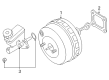
Mazda Tribute Brake Booster Part Number: EFY3-43-80Z
$100.76 MSRP: $132.26You Save: $31.50 (24%)Ships in 1-2 Business Days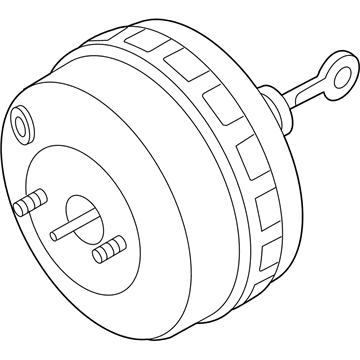
Mazda Tribute Brake Booster Part Number: ZZD1-43-800
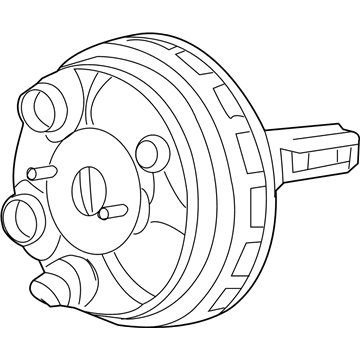
Mazda Tribute Brake Booster Part Number: ZZC4-43-800
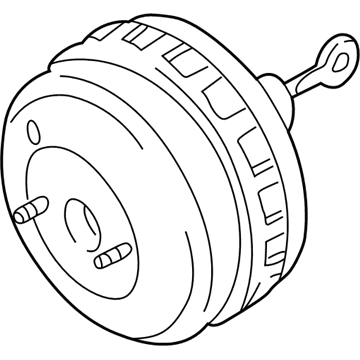
Mazda Tribute Brake Booster Part Number: EC01-43-800B
Mazda Tribute Brake Booster
The Mazda Tribute Brake Booster allows drivers to press their pedal much less to stop their heavy SUV with pressure assist, which multiplies the force applied to the master cylinder by the Brake Booster. This Brake Booster is mounted between the brake pedal and master cylinder, and even a slight tap can press the brakes hard. During normal driving, Mazda car drivers hardly pay attention to the device working. Over the years there have been two major designs applied in the Mazda model line, the common vacuum unit and the less applied hydraulic unit. The vacuum style utilizes engine vacuum by way of a sealed shell with a large diaphragm and power piston. At rest, there is no vacuum at the two faces of the diaphragm. When the pedal is pressed, an internal valve is opened, atmospheric air rushes into the rear chamber, and the resultant difference in pressure pushes the piston forward, increasing hydraulic pressure to the wheels. Since it relies on engine vacuum, the assistance is lost after a few stops in case of engine stalling. Hydraulic types steal fluid under high pressure through the power steering pump or an auxiliary electric pump and therefore will continue to assist when the vacuum is low, a feature added on certain Tribute models. The objective of both types of Brake Boosters is reliability; however, any vacuum or hydraulic pressure loss results in the system providing only manual braking, which emphasizes the crucial safety nature of the small Brake Booster component in any Mazda braking system.
Looking for Brake Booster with proven quality? Choose OEM Brake Booster. Mazda designs and builds them to strict factory specs. Every piece goes through rigorous quality checks. You'll get parts that fit right and work like new. Shop our huge inventory of OEM Mazda Tribute parts. Enjoy the highly competitive prices online. Our site is your one-stop shop. Each genuine Tribute part includes a manufacturer's warranty. Buy with confidence. Our return policy is simple and hassle-free. In a rush? Choose expedited delivery at checkout. You'll love the streamlined experience from search to checkout to receiving your order.
Mazda Tribute Brake Booster Parts and Q&A
- Q:How to perform an operating check and remove or install a brake booster on Mazda Tribute?A:In order to carry out an operating check, repeatedly press the brake pedal when the engine is off to ascertain that no variation is noticed on the pedal reserve distance. Next, press the pedal and start the engine; in case the pedal is pressed only a little, then everything is fine. To test airtightness, Prime the engine and switch it off after one or two minutes, and press the brake pedal a few times gradually. To the extent that the first depression is more than the second or third depression, the pedal will descend further and then slowly rise afterwards, then the booster is airtight. When engine is running, press brake pedal and then switch off engine with the pedal in position, then without releasing the pedal, the booster should have no change in the travel against the resistance when holding the pedal does not change the travel in 30 seconds, the booster is airtight. To remove and install On 2012 and older, remove the nuts holding the master cylinder to booster and carefully pull forward the master cylinder until out of the mounting studs, without bending or kinking the Brake Lines. It might also be required to disconnect EVAP canister purge valve in the V6 models. In 2013 and subsequent models remove the master cylinder, and also the hydraulic lines between the master cylinder to the ABS Hydraulic Control Unit may need to be removed too. Unhook the vacuum hose on the power brake booster, lose the Brake Light Switch and strip the pushrod out of the top of the brake pedal, with the exception of 2008 and later models, where the clevis locking pin has to be cut off and a new one installed. Take off the nuts that the booster is connected to the firewall with, take off the power brake booster holding it to the firewall and gently remove the booster unit out of the engine compartment and off the firewall. Installation To fit the booster, simply clamp it in place and screw the retaining nuts in the required tighten settings, and then fit the pushrod to the brake pedal. Install the master cylinder and re-connect the vacuum hose. In 2013 (and subsequent models) bleed brake system and test brakes care before putting vehicle in normal service.
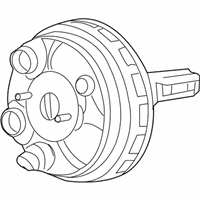
Related Mazda Tribute Parts
 Mazda Tribute ABS Sensor
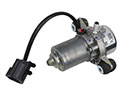 Mazda Tribute Brake Booster Vacuum Pump
 Mazda Tribute Brake Caliper Repair Kit
 Mazda Tribute Brake Line
 Mazda Tribute Brake Master Cylinder
 Mazda Tribute Brake Master Cylinder Repair Kit
 Mazda Tribute Brake Master Cylinder Reservoir
 Mazda Tribute Brake Rotor
 Mazda Tribute Shut Off Valve
 Mazda Tribute Spindle Nut
 Mazda Tribute Vacuum Check Valve
 Mazda Tribute Vacuum Pump