×
- Hello
- Login or Register
- Quick Links
- Live Chat
- Track Order
- Parts Availability
- RMA
- Help Center
- Contact Us
- Shop for
- Mazda Parts

My Garage
My Account
Cart
Genuine Mazda Tribute Radiator
Cooling Radiator- Select Vehicle by Model
- Select Vehicle by VIN
Select Vehicle by Model
orMake
Model
Year
Select Vehicle by VIN
For the most accurate results, select vehicle by your VIN (Vehicle Identification Number).
5 Radiators found
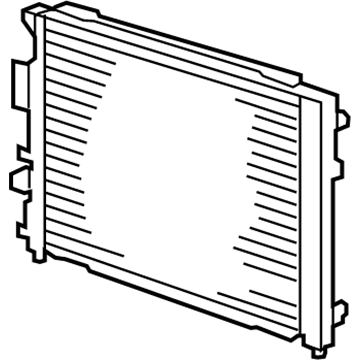
Mazda Tribute Radiator Part Number: ZZCA-15-200
$249.33 MSRP: $332.49You Save: $83.16 (26%)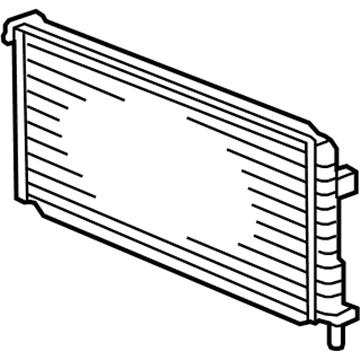
Mazda Tribute Radiator Part Number: ZZEB-15-200
$288.20 MSRP: $384.35You Save: $96.15 (26%)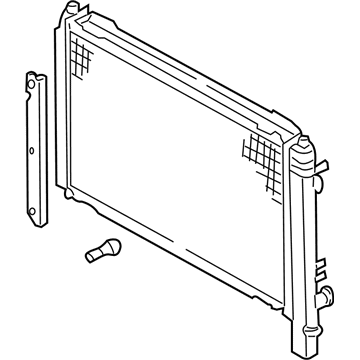
Mazda Tribute Radiator Part Number: ZZC5-15-200A
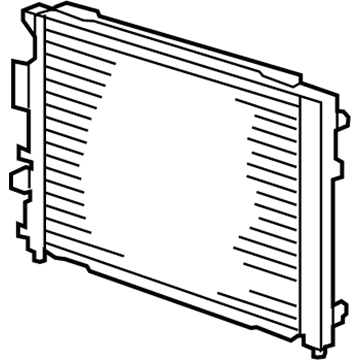
Mazda Tribute Radiator Part Number: ZZC4-15-200A
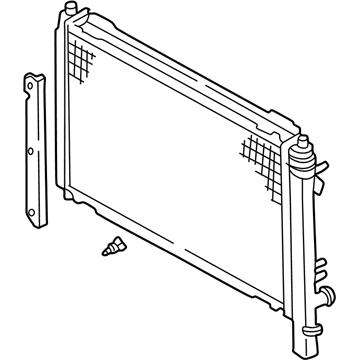
Mazda Tribute Radiator Part Number: ZZC2-15-200
Mazda Tribute Radiator
The Mazda Tribute Radiator keeps the engine of the compact SUV at a safe temperature by allowing the hot coolant to dispose of its heat to the fast-flowing air, and then the coolant returns to the block. The Radiator, which is installed behind the grille at the rear, is a series of slender tubes in a dense meshwork of fins that form a massive surface area that enables convection to remove the heat rapidly. The majority of units in this model are based on a core of aluminum and plastic or aluminum side tanks, which are a light construction that contributes to fuel economy, with past copper or brass models contributing strength at the expense of more weight and added cost. Regardless of the material, coolant is pumped through an inlet tank into the core and through an outlet tank, providing a source of air to facilitate the exchange, which in the Tribute is provided by the fan or vehicle motion. This mechanism protects pistons, oil and gaskets against destruction from overheating, and maintains all Mazda engines within the desired operating temperature range. Since the fins are very efficient in conducting heat, even short journeys will produce enough airflow that will cool effectively. Leakage of tubes or seams is easy to occur and, despite the fact that one can temporarily partially seal small holes, it is typically highly effective to restore factory performance to any Mazda that begins to lose its coolant. Through the performing of this basic yet essential function, the Radiator becomes the hub of the cooling system in all subsequent-year Tributes and serves to help keep Mazda reliable in normal driving.
Looking for Radiator with proven quality? Choose OEM Radiator. Mazda designs and builds them to strict factory specs. Every piece goes through rigorous quality checks. You'll get parts that fit right and work like new. Shop our huge inventory of OEM Mazda Tribute parts. Enjoy the highly competitive prices online. Our site is your one-stop shop. Each genuine Tribute part includes a manufacturer's warranty. Buy with confidence. Our return policy is simple and hassle-free. In a rush? Choose expedited delivery at checkout. You'll love the streamlined experience from search to checkout to receiving your order.
Mazda Tribute Radiator Parts and Q&A
- Q:How to remove and install the radiator on Mazda Tribute?A:To disassemble the radiator of 2007 and older models, the cable to the negative battery terminal is loosened and the vehicle is then raised and placed on jackstands with the lower splash shields removed. empty the cooling system, and conserve the coolant (in good condition). Detach the cooling fan shrouds of the radiator, fully on 2005 -2007 and on older models, the hood latch and center support. Unscrew the lower radiator hose and the expansion tank hose of the left side tank (3.0L models) or the right side tank (four-cylinder engines) and unscrew the cooler hose (where fitted) having an automatic transaxle. Reduce the vehicle and remove the expansion tank hose and upper radiator hose on the right side of the radiator as well as removing the other fluid cooler hose should it have one. Take off the radiator support brackets, and pick out the radiator carefully taking care not to spill the coolant or scratch the paint, and to ensure that the rubber insulators are not lost. Dust the radiator using compressed air and a soft brush and check on leaks as well as damage. In 2008-2012 models, empty the engine coolant, disassemble the engine cooling fans, disconnect all hoses to the radiator, and remove the upper bolts connecting the air conditioning condenser with the radiator and then take out the radiator carefully. On 2013 and subsequent models, remove the cooling module and lower radiator support, lose the spring clamps and hoses on the transmission fluid cooler control valve, pry out the clips that hold the radiator and condenser together and disconnect the condenser, cut the foam seal between the radiator and condenser and disconnect the condenser and radiator. When installing, check the cracks of the rubber insulators, make sure they are clean and then properly position the radiator over the insulators, and then attach the retaining brackets. Once installed, fill the cooling system with the proper antifreeze and water mixture, re-connect the battery and let the Powertrain Control Module relearn its idle and fuel trim strategy. Start the engine, inspect it, and verify the engine is at normal operating temperature, rechecking the level of the coolant and pouring more in where necessary, and also checking and pouring fluid into the vehicles with an automatic transaxle where necessary.
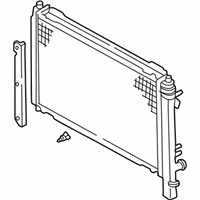
Related Mazda Tribute Parts
 Mazda Tribute Thermostat
 Mazda Tribute Water Pump
 Mazda Tribute Oil Cooler Hose
 Mazda Tribute Radiator Drain Plug
 Mazda Tribute Coolant Pipe
 Mazda Tribute Coolant Pipe Seal
 Mazda Tribute Coolant Reservoir Cap
 Mazda Tribute Coolant Reservoir Hose
 Mazda Tribute Cooling Fan Assembly
 Mazda Tribute Cooling Fan Bracket
 Mazda Tribute Cooling Hose
 Mazda Tribute Radiator fan