×
- Hello
- Login or Register
- Quick Links
- Live Chat
- Track Order
- Parts Availability
- RMA
- Help Center
- Contact Us
- Shop for
- Mazda Parts

My Garage
My Account
Cart
Genuine Mazda MPV Starter
Starter Ignition- Select Vehicle by Model
- Select Vehicle by VIN
Select Vehicle by Model
orMake
Model
Year
Select Vehicle by VIN
For the most accurate results, select vehicle by your VIN (Vehicle Identification Number).
3 Starters found
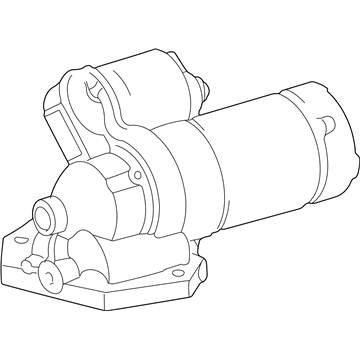
Mazda MPV Starter Part Number: AJF1-18-400R-00
$294.35 MSRP: $390.45You Save: $96.10 (25%)Ships in 1-2 Business Days
Mazda MPV Starter Part Number: GY01-18-400R-00

Mazda MPV Starter Part Number: G602-18-400R-00
Mazda MPV Starter
The Mazda MPV Starter provides the mechanical spinning kick, which activates the engine of the minivan with the turn of a key. With heavy current flowing in a solenoid that is connected directly to a battery, this Starter will transform electrical power into rotation of the armature and drive a small pinion into the teeth of the flywheel, thus allowing the engine to start by itself. This fundamental layout was applied in early and later editions of the MPV, but there have been two primary styles that have emerged throughout the years. Traditional Mazda direct-drive units in all production years have a massive armature that passes directly to the pinion, whereas the lighter gear-reduction design passes through a reduction gear set, which allows the motor to rotate quickly with the pinion rotating more slowly but with more force, which would be beneficial in cold starting or in engines with higher compression ratios. Both designs use magnetic flux in the form of field coils, or in more modern versions, permanent magnets, but each Starter has an overrunning clutch to drive the pinion off when the engine fires to protect the system against overspeed damage. The safety features are connected to the ignition circuit, i.e., a neutral or clutch switch should be able to confirm that the vehicle is not in gear before power can be sent to the solenoid. Due to such enhancements, Mazda users can experience rapid engine starting, and reliable startups of Mazda electrical engineering allow them to depart their homes every day without any problems.
Looking for Starter with proven quality? Choose OEM Starter. Mazda designs and builds them to strict factory specs. Every piece goes through rigorous quality checks. You'll get parts that fit right and work like new. Shop our huge inventory of OEM Mazda MPV parts. Enjoy the highly competitive prices online. Our site is your one-stop shop. Each genuine MPV part includes a manufacturer's warranty. Buy with confidence. Our return policy is simple and hassle-free. In a rush? Choose expedited delivery at checkout. You'll love the streamlined experience from search to checkout to receiving your order.
Mazda MPV Starter Parts and Q&A
- Q:What should you check before diagnosing starter problems on Mazda MPV?A:The battery is to be fully charged before starting to diagnose the problems with the starter. Should the starter fail to start when the switch is used, examine that in the case of an automatic transmission the shift lever remains in the Neutral or Park position, or in the case of a manual transmission the clutch pedal has been pressed. Ensure that the battery is recharged and that all the wires at the battery and starter solenoid terminals are clean and well attached. When the starter is turning but the engine is not cranking, then the overrunning clutch in the starter is slipping and needs to be replaced. When the starter is not working at all and the solenoid clicks the problem can be the battery, the major solenoid contacts, or the starter itself, or the engine can be seized. When the solenoid plunger cannot be heard when the switch is actuated, then the battery is possible to be flawed, the fusible link might have been burnt, or the solenoid could be faulty. To test the solenoid, place a jumper lead between the ignition switch wire terminal and the battery positive on the solenoid, in case the starter switches on, the solenoid is functioning and there is a problem with the ignition switch, Neutral start switch or wiring. In case the starter is also not functioning, take out the starter/solenoid assembly to disassemble, test, and repair. When the starter has a slow crank, make sure that the battery is charged and that all the terminal connections are tight; a partially seized engine or a wrong oil viscosity may also result in slow cranking. Start the engine until it is up to normal operating temperature after which the coil wire is disconnected to the distributor cap and grounded on the engine. Attach a positive voltmeter lead to a positive battery post and a negative voltmeter lead to a negative battery post. Turn on the engine making voltmeter readings as soon as a constant figure has been shown taking not more than 15 seconds of starter action at any time. A reading of 9 volts or above and normal cranking speed is good but when the reading is 9 volts or above and the cranking speed is slow then the starter is defective. When the reading is lower than 9 volts and the cranking speed is slow, it might result in burning of the solenoid contacts, bad starter, discharging of the battery, or a faulty connection.
Related Mazda MPV Parts
 Mazda MPV Alternator
 Mazda MPV Alternator Bearing
 Mazda MPV Alternator Brush
 Mazda MPV Alternator Pulley
 Mazda MPV Armature
 Mazda MPV Battery Cable
 Mazda MPV Battery Hold Downs
 Mazda MPV Battery Tray
 Mazda MPV Starter Brush
 Mazda MPV Starter Drive Gear
 Mazda MPV Starter Solenoid
 Mazda MPV Voltage Regulator