×
- Hello
- Login or Register
- Quick Links
- Live Chat
- Track Order
- Parts Availability
- RMA
- Help Center
- Contact Us
- Shop for
- Mazda Parts

My Garage
My Account
Cart
Genuine Mazda MPV Piston
Engine Pistons- Select Vehicle by Model
- Select Vehicle by VIN
Select Vehicle by Model
orMake
Model
Year
Select Vehicle by VIN
For the most accurate results, select vehicle by your VIN (Vehicle Identification Number).
3 Pistons found

Mazda MPV Pistons Part Number: ZZCA-11-100
$47.20 MSRP: $62.94You Save: $15.74 (26%)
Mazda MPV Pistons Part Number: JEY711SLXA
Mazda MPV Piston Part Number: G602-11-SA0
Mazda MPV Piston
Looking for Piston with proven quality? Choose OEM Piston. Mazda designs and builds them to strict factory specs. Every piece goes through rigorous quality checks. You'll get parts that fit right and work like new. Shop our huge inventory of OEM Mazda MPV parts. Enjoy the highly competitive prices online. Our site is your one-stop shop. Each genuine MPV part includes a manufacturer's warranty. Buy with confidence. Our return policy is simple and hassle-free. In a rush? Choose expedited delivery at checkout. You'll love the streamlined experience from search to checkout to receiving your order.
Mazda MPV Piston Parts and Q&A
- Q:What steps must be taken before removing the piston and connecting rod assemblies on Mazda MPV?A:The oil pump, oil pan and Cylinder Head(s) have to be removed before the piston and connecting rod assemblies. First, touch with your fingernail to establish any ridge at the upper limit of the amount of travel of the ring, at the distance of about 1/4 inch below the top of each cylinder. In case of the presence of ridges because of carbon deposit or cylinder wear, they should be completely cleaned off using a ridge reamer in order to prevent the breakage of the pistons. After clearing the ridges, invert the engine and place the Crankshaft upwards. Check the side clearance (endplay) before the removal of the connecting rods with feeler gauges and be sure that the play is removed. In case the endplay is more than the service limit, more connecting rods are possible and in case of connection of new rods or a new crankshaft, the endplay can be lower than the minimum specification and thus it has to be machined. Label identifying marks on the connecting rods and caps, and in case they are not labeled, make marks with a center punch. Relax the connecting rod cap nuts so that they can be removed by hand and then loosen the number one connecting rod cap and bearing insert without dropping the insert. To guard the crankshaft journal and the cylinder wall during the removal of the piston, slip a short piece of plastic or rubber hose over all the connecting rod cap bolts. Take out the bearing insert, and force the connecting rod / piston assembly through the engine top, with a piece of wood or plastic hammer handle pushing on the upper half of the bearing surface. In case of resistance, make all ridge material removed. This process should be repeated with the rest of the cylinders. Removed caps of connecting rods and bearing inserts should be replaced in the respective rods and the cap nuts should be fitted by fingers to ensure that they are not accidentally damaged on the bearing surfaces. The pistons should not be isolated of the connecting rods.
- Q:What steps should be taken before the inspection process of piston/connecting rod assemblies on Mazda MPV?A:The piston/connecting rod assemblies must be cleaned and original piston rings have to be removed off the pistons before the inspection process could be performed, and always new piston rings should be used in their place. The rings need to be removed with a piston ring expander tool and care should be taken not to harm the pistons. Every bit of carbon should be removed off the top of the piston by scraping with a hand held wire brush or a fine emery cloth but never by using a wire brush attached to a drill motor or it will erode the soft piston material. The carbon in the ring grooves may be cleared using a piston ring groove cleaning instrument or a fragment of a broken ring without damaging the grooves. Cleaning, the piston/rod assemblies are to be cleaned by using solvent followed by dry blow by the use of compressed air where possible. Provided that the pistons and the cylinder walls are not worn out too much, and the engine block is not rebored, new pistons might not be required however new piston rings must always be fitted during refurbishment. All the pistons are to be examined on cracks, scoring and scuffing, holes, and burned areas, which may point out to excessive heat or un-normal combustion and this is where the cooling and lubrication systems are to be checked thoroughly. Small pits as a manifestation of corrosion imply the possibility of coolant leakage, and this should be prevented in the rebuilt engine. Feeler gauge should be applied at various locations around each groove and care should be taken to ensure that the appropriate ring is applied to the appropriate groove; failing which the new pistons may be necessary. The piston-to-bore clearance can be verified through the measurement of the bore and piston diameter; the bore and the piston diameter has to be matched properly and the difference between them calculated as the clearance. The clearance of the piston to the rod is measured by twisting the piston and the rod, and observed play being an indication of too much wear, which should be corrected, which may involve a resizing in an automotive machine shop. When the removal of pistons in the connecting rods is required, then they should also be taken to a machine shop to check whether they are bent and twisted. Linking rods is the next step to be checked on cracks and damages by taking the rod caps and old bearing inserts off, cleaning the surfaces, and inspecting the nicks or scratches before replacing the bearings and fitting the caps. In case of a rebuilding because of a connecting rod knock, new rods are needed to be installed.
Related Mazda MPV Parts
 Mazda MPV Timing Chain
 Mazda MPV Oil Pan Gasket
 Mazda MPV Camshaft
 Mazda MPV Crankshaft Seal
 Mazda MPV Intake Valve
 Mazda MPV Rocker Arm
 Mazda MPV Timing Cover Gasket
 Mazda MPV Valve Cover
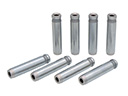 Mazda MPV Valve Guide
 Mazda MPV Valve Spring
 Mazda MPV Valve Spring Retainer
 Mazda MPV Valve Spring Retainer Keeper