×
- Hello
- Login or Register
- Quick Links
- Live Chat
- Track Order
- Parts Availability
- RMA
- Help Center
- Contact Us
- Shop for
- Mazda Parts

My Garage
My Account
Cart
Genuine Mazda MPV Wheel Cylinder
Brake Wheel Cylinder- Select Vehicle by Model
- Select Vehicle by VIN
Select Vehicle by Model
orMake
Model
Year
Select Vehicle by VIN
For the most accurate results, select vehicle by your VIN (Vehicle Identification Number).
5 Wheel Cylinders found

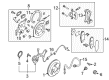
Mazda MPV Wheel Cylinder Part Number: LC62-26-610C
$41.45 MSRP: $55.28You Save: $13.83 (26%)Ships in 1-2 Business DaysMazda MPV Wheel Cylinder Part Number: LA12-26-710
$46.31 MSRP: $61.76You Save: $15.45 (26%)Ships in 1-2 Business DaysMazda MPV Wheel Cylinder Part Number: LA12-26-610
$8.18 MSRP: $10.74You Save: $2.56 (24%)Ships in 1-2 Business Days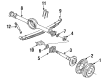
Mazda MPV Wheel Cylinder Part Number: LA01-26-710
Mazda MPV Wheel Cylinder Part Number: LA01-26-610
Mazda MPV Wheel Cylinder
Looking for Wheel Cylinder with proven quality? Choose OEM Wheel Cylinder. Mazda designs and builds them to strict factory specs. Every piece goes through rigorous quality checks. You'll get parts that fit right and work like new. Shop our huge inventory of OEM Mazda MPV parts. Enjoy the highly competitive prices online. Our site is your one-stop shop. Each genuine MPV part includes a manufacturer's warranty. Buy with confidence. Our return policy is simple and hassle-free. In a rush? Choose expedited delivery at checkout. You'll love the streamlined experience from search to checkout to receiving your order.
Mazda MPV Wheel Cylinder Parts and Q&A
- Q:What should you consider before beginning an overhaul of the wheel cylinder on Mazda MPV?A:In case of an overhaul, which is often caused by the leakage of fluids, or due to sticky operation, investigate all possible options before starting the work. This is very easy as new wheel cylinders exist. In the event that you have decided to rebuild the wheel cylinder, make sure that a rebuild kit is in place. Always replace both wheels cylinders at the same time. One can begin by loosening the lug nuts of the wheels, lifting up the rear part of the car and resting on jack stands ensuring that the front wheels are blocked so that the car does not roll over. Take the brake shoe assembly off, and wash all dirt and foreign matter about the wheel cylinder. Removal of the Brake Line fitting located on the back of the brake backing plate and the removal of the bolts that hold the wheel cylinder without removal of the brake line. Unconnect the wheel cylinder with the brake backing plate and place it on a clean workbench and ensure that the brake line is blocked at once to avoid the loss and contamination of the fluid. In case the linings of the brake shoe are contaminated with the brake fluid, fit new brake shoes. The next step is to pull the bleeder screw, cups, pistons, boots and spring assembly out of the wheel cylinder body. Wipe the wheel cylinder with braking fluid or denatured alcohol or brake system cleaner and blow out the passages using compressed air. Checking of the cylinder bore- Corrosion and score marks- Light corrosion can be cleaned with crocus cloth, but where corrosion and score marks cannot be easily removed or cylinder scored, then replace the cylinder. Apply brake oil to the new cups and put wheel cylinder parts together, making sure that the cup lips are turned inward. Lastly, install the wheel cylinder with the bolts and brake line, connect the brake line and tighten the fitting and then install the brake shoe assembly. Bleed the brakes and test the functionality of brakes before taking the vehicle to traffic.
Related Mazda MPV Parts
 Mazda MPV Brake Pads
 Mazda MPV Axle Shaft Seal
 Mazda MPV Brake Booster Vacuum Hose
 Mazda MPV Brake Caliper
 Mazda MPV Brake Caliper Repair Kit
 Mazda MPV Brake Dust Shields
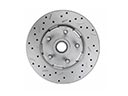 Mazda MPV Brake Rotor
 Mazda MPV Brake Shoe Set
 Mazda MPV Spindle Nut
 Mazda MPV Wheel Hub
 Mazda MPV Wheel Hub Bolt
 Mazda MPV Wheel Stud