×
- Hello
- Login or Register
- Quick Links
- Live Chat
- Track Order
- Parts Availability
- RMA
- Help Center
- Contact Us
- Shop for
- Mazda Parts

My Garage
My Account
Cart
Genuine Mazda Clutch Disc
Friction Disc- Select Vehicle by Model
- Select Vehicle by VIN
Select Vehicle by Model
orMake
Model
Year
Select Vehicle by VIN
For the most accurate results, select vehicle by your VIN (Vehicle Identification Number).
41 Clutch Discs found
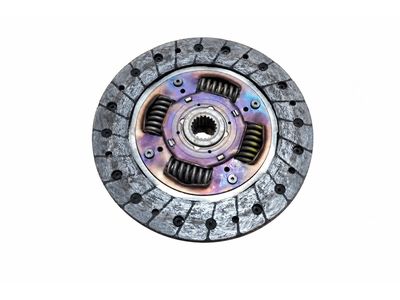
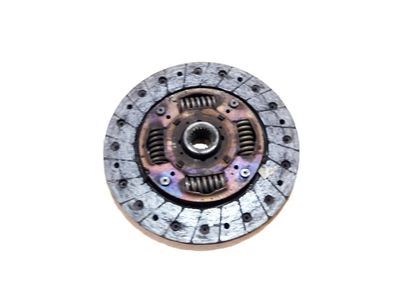
Mazda Disc Part Number: ZJ02-16-460
$72.59 MSRP: $96.80You Save: $24.21 (26%)Product Specifications- Other Name: Disc, Clutch
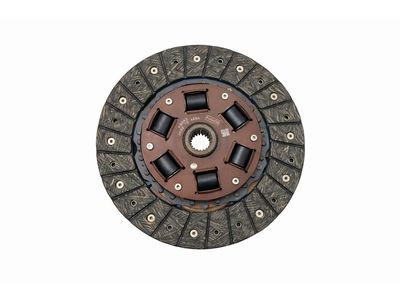
Mazda Disc Part Number: PE02-16-460A
$127.65 MSRP: $170.24You Save: $42.59 (26%)Ships in 1-2 Business DaysProduct Specifications- Other Name: Disc, Clutch
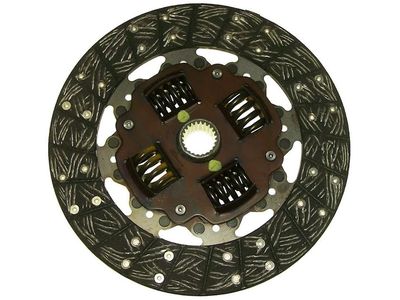
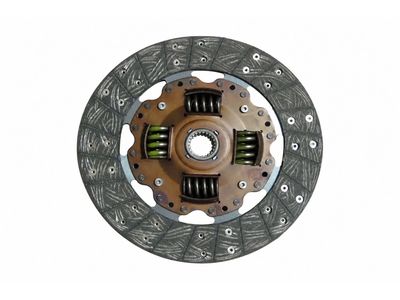
Mazda Disc Part Number: N315-16-460D
$167.48 MSRP: $223.34You Save: $55.86 (26%)Ships in 1-2 Business DaysProduct Specifications- Other Name: Clutch Disc
- Replaces: N315-16-460D-9U
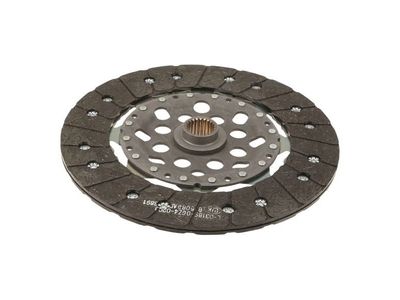
Mazda Disc Part Number: PY01-16-460
$176.16 MSRP: $234.93You Save: $58.77 (26%)Ships in 1-2 Business DaysProduct Specifications- Other Name: Disc, Clutch
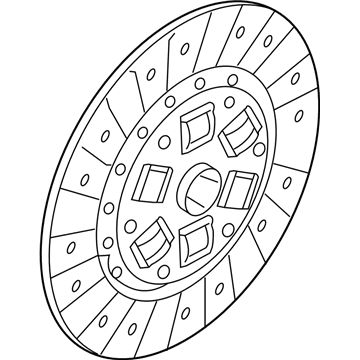
Mazda Disc Part Number: PE01-16-460
$147.33 MSRP: $196.47You Save: $49.14 (26%)Ships in 1-2 Business DaysProduct Specifications- Other Name: Disc, Clutch; Clutch

Mazda Disc Part Number: PE33-16-460
$158.99 MSRP: $212.02You Save: $53.03 (26%)Ships in 1-2 Business DaysProduct Specifications- Other Name: Disc, Clutch; Clutch
Mazda Disc Part Number: PE32-16-460
$234.00 MSRP: $312.06You Save: $78.06 (26%)Ships in 1-2 Business DaysProduct Specifications- Other Name: Clutch Disc; Clutch
Mazda Disc Part Number: HE11-16-460A
$17.74 MSRP: $128.68You Save: $110.94 (87%)Ships in 1-2 Business DaysProduct Specifications- Other Name: Clutch Disc
Mazda Disc Part Number: L502-16-460
$95.66 MSRP: $127.57You Save: $31.91 (26%)Ships in 1-2 Business DaysProduct Specifications- Other Name: Clutch Disc
Mazda Disc Part Number: B634-16-460C
$96.49 MSRP: $128.67You Save: $32.18 (26%)Ships in 1-2 Business DaysProduct Specifications- Other Name: Clutch Disc
- Replaces: B623-16-460B, B634-16-460A-9U, B634-16-460, B634-16-460A, B622-16-460A, B634-16-460B-9U, B630-16-460
Mazda Disc Part Number: FS04-16-460C
$100.11 MSRP: $133.51You Save: $33.40 (26%)Ships in 1-2 Business DaysProduct Specifications- Other Name: Clutch Disc
Mazda Disc Part Number: KL07-16-460-9U
$101.86 MSRP: $135.84You Save: $33.98 (26%)Ships in 1-2 Business DaysProduct Specifications- Other Name: Clutch Disc
Mazda Disc Part Number: FS06-16-460A
$123.98 MSRP: $165.33You Save: $41.35 (26%)Ships in 1-2 Business DaysProduct Specifications- Other Name: Disc, Clutch
- Replaces: FS06-16-460
Mazda Disc Part Number: LF03-16-460A
$128.53 MSRP: $171.40You Save: $42.87 (26%)Ships in 1-2 Business DaysProduct Specifications- Other Name: Disc, Clutch
- Replaces: LF03-16-460
Mazda Disc Part Number: B631-16-460B-9U
$145.43 MSRP: $193.94You Save: $48.51 (26%)Ships in 1-2 Business DaysProduct Specifications- Other Name: Clutch Disc
Mazda Disc Part Number: PY11-16-460
$161.86 MSRP: $215.85You Save: $53.99 (26%)Ships in 1-2 Business DaysProduct Specifications- Other Name: Disc, Clutch; Clutch
Mazda Disc Part Number: LF08-16-460A
$164.31 MSRP: $219.12You Save: $54.81 (26%)Ships in 1-2 Business DaysProduct Specifications- Other Name: Disc, Clutch
- Replaces: L303-16-460A, L301-16-460C, L301-16-460D, L303-16-460C, L301-16-460A, L302-16-460A, LF08-16-460, L302-16-460C
Mazda Disc Part Number: L501-16-460A
$178.10 MSRP: $237.51You Save: $59.41 (26%)Ships in 1-2 Business DaysProduct Specifications- Other Name: Disc, Clutch
- Replaces: L501-16-460
Mazda Clutch Disc Part Number: ZZC0-16-400
$182.96 MSRP: $243.99You Save: $61.03 (26%)Product Specifications- Other Name: Clutch Set, Disc & Plate
- Replaces: YF01-16-460A, YF01-16-460D, YF01-16-460C, YF01-16-460B
Mazda Disc Part Number: F208-16-460C
Product Specifications- Other Name: Clutch Disc
- Replaces: F208-16-460B
| Page 1 of 3 |Next >
1-20 of 41 Results
Mazda Clutch Disc
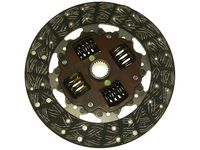
Mazda Clutch Disc helps smoothly transfer power from the engine to the transmission to allow drivers to launch, shift, and stop with confidence. A Clutch Disc in any Mazda lies between the flywheel and pressure plate, the friction linings of which bite firmly as the pedal is raised, while coil springs in the hub soak up the shock so that the drivetrain remains calm during quick gear changes. This part also separates power instantaneously when the pedal is dropped, protecting gears and allowing for clean shifts, and its heat-resistant materials stand up to thousands of engagements, keeping performance sharp across city commutes or spirited drives. By utilizing organic or metallic mixes suited to torque requirements, the Clutch Disc is perfectly compatible with the balance of efficiency and fun that the brand is known for without tying installation to one single model. At the same time, Mazda as a company builds cars that combine lightweight engineering and Skyactiv powertrains with the goal of spirited handling and lower fuel consumption. From the first rotary-powered icons to today's mild hybrids, Mazda continues to push technology that feels alive in the hands of regular drivers. Its Kodo design language gives every car a sculpted look that is ready to move even when parked, and i-Activsense features such as radar cruise provide safety on busy streets. Add to this available i-Activ AWD for grip on rough roads, and Mazda proves that smart features and a grin-inducing ride can live together in every car it offers.
You'll get great performance and real durability when you pick genuine OEM Clutch Disc. Mazda builds these using high-quality materials and official factory methods to ensure they hold up mile after mile. You deserve that Mazda reliability without the headache of cheap knockoffs. It is easy to find exactly what you need in our huge inventory of genuine parts. Plus, every OEM part carries a real manufacturer's warranty for your peace of mind. You will love our low prices too. Order today and we will ship your brand-new parts fast. They often reach your door in just a few days.
Mazda Clutch Disc Parts and Q&A
- Q:What steps are involved in diagnosing and servicing a hydraulic clutch disc system on Mazda 626?A:Since model year 1986, some of the models have hydraulic clutch release system installed which consists of the clutch pedal, master cylinder, fluid reservoir, hydraulic line, slave cylinder and clutch release bearing. The initial checks of the diagnosis of clutch system failure should monitor the fluid level in the master cylinder and leaks. To have full release of the clutch, travel of the release cylinder push-rod must be adjusted to have the pedal fully depressed. The height of the clutch pedal can be altered by using a distance between the pad of the pedal to the floor and changing the stopper bolt when needed. The height of free-play and disengagement should also be measured and adjusted by adjusting the push-rod to the master cylinder. To remove and install the clutch master cylinder, make sure you detach the negative battery cable, and remove the hydraulic line in a painstaking manner in order to prevent spillage of fluids. Once the master cylinder is firmly fixed, the hydraulic line is to be re-attached, and the system drained with DOT 3 brake fluid. Equally, in case of the release cylinder, the negative battery cable must be disconnected and the vehicle lifted off and the hydraulic line taken out, then the new cylinder should be installed and the hydraulic line reattached. It is necessary to bleed the hydraulic system, to make sure that the master cylinder contains new DOT 3 fluid, and it is performed with the help of a hose attached to bleeder valve when an assistant presses the clutch pedal. Once the system is checked to make sure that all air is removed and working properly, then the vehicle may be lowered back into service.
- Q:How to access and replace the clutch disc located between the engine and transmission on Mazda RX-7?A:The clutch components are located between the engine and the transmission and, therefore, one or the other component has to be removed. In case the repairs do not need engine removal, the quickest way to access the clutch is to remove the transmission. The first step is to take out the clutch release bearing and release fork out of the transmission; the bearing slides over the shaft of the transmission and the fork can be pulled through its rubber boot. It is important to note that before unscrewing the pressure plate and the clutch disc off the flywheel, a person should not bend or distort the metal fingers since it will not only lead to a replacement of the pressure plate. In order to hold the position of the pressure plate on the flywheel when replacing, cut an alignment mark with the small hole in the pressure plate mounting flange. Unscrew the six bolts connecting the pressure plate and the clutch disc to the flywheel, screwing them out gradually and in a diagonal manner to prevent deforming the assembly and again, two of the bolts are placed in larger, reamed holes in the mounting flange. Lastly, remove the pressure plate and clutch disc carefully and do not allow any of the oil or grease to spill on the disc lining or the pressure plate or flywheel surface.
Related Mazda Parts
 Mazda Flywheel
 Mazda Torque Converter
 Mazda Automatic Transmission Filter
 Mazda Clutch Fork
 Mazda Clutch Release Bearing
 Mazda Flywheel Ring Gear
 Mazda Pilot Bearing
 Mazda Pressure Plate
 Mazda Transmission Assembly
 Mazda Transmission Gasket
 Mazda Transmission Pan
 Mazda Transmission Sensor
Browse by Model
2 Clutch Disc 3 Clutch Disc 323 Clutch Disc 5 Clutch Disc 6 Clutch Disc 626 Clutch Disc B2000 Clutch Disc B2200 Clutch Disc B2300 Clutch Disc B2500 Clutch Disc B2600 Clutch Disc B3000 Clutch Disc B4000 Clutch Disc CX-5 Clutch Disc GLC Clutch Disc Miata Clutch Disc MX-3 Clutch Disc MX-5 Miata Clutch Disc MX-6 Clutch Disc Protege Clutch Disc Protege5 Clutch Disc RX-7 Clutch Disc RX-8 Clutch Disc Tribute Clutch Disc