×
- Hello
- Login or Register
- Quick Links
- Live Chat
- Track Order
- Parts Availability
- RMA
- Help Center
- Contact Us
- Shop for
- Mazda Parts

My Garage
My Account
Cart
Genuine Mazda Rod Bearing
Engine Connecting Rod Bearing- Select Vehicle by Model
- Select Vehicle by VIN
Select Vehicle by Model
orMake
Model
Year
Select Vehicle by VIN
For the most accurate results, select vehicle by your VIN (Vehicle Identification Number).
59 Rod Bearings found
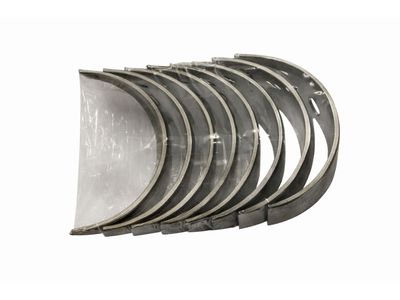
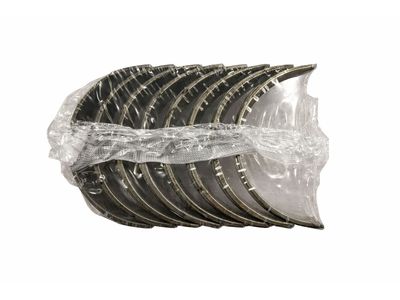
Mazda Connecting Rod Bearing Part Number: SHY1-11-SFXA
$123.54 MSRP: $164.75You Save: $41.21 (26%)Ships in 1-2 Business DaysProduct Specifications- Other Name: Metal Set, Connecting Rod

Mazda Bearing Set Part Number: B6Y3-11-SE0
$89.24 MSRP: $119.00You Save: $29.76 (26%)Ships in 1-2 Business DaysProduct Specifications- Other Name: Metal Set, Connecting Rod
- Replaces: B6Y2-11-SE0A, B6Y2-11-SE0
Mazda Bearing Part Number: 1F22-11-225B
$15.50 MSRP: $20.67You Save: $5.17 (26%)Ships in 1-2 Business DaysProduct Specifications- Other Name: Metal, Connecting Rod
Mazda Bearing Set, Connecting Rod Part Number: CWA1-11-227
$16.65 MSRP: $22.20You Save: $5.55 (25%)Ships in 1-2 Business DaysProduct Specifications- Other Name: BEARING SET, CONNECTING R; Connecting Rod Bearing
Mazda Bearing Set, Connecting Rod Part Number: CWA1-11-226
$16.65 MSRP: $22.20You Save: $5.55 (25%)Ships in 1-2 Business DaysProduct Specifications- Other Name: BEARING SET, CONNECTING R; Connecting Rod Bearing
Mazda Bearing Set, Connecting Rod Part Number: CWA1-11-225
$16.65 MSRP: $22.20You Save: $5.55 (25%)Ships in 1-2 Business DaysProduct Specifications- Other Name: BEARING SET, CONNECTING R; Connecting Rod Bearing
Mazda Metal, Crankshaft Part Number: CWA1-11-355
$26.08 MSRP: $34.77You Save: $8.69 (25%)Ships in 1-2 Business DaysProduct Specifications- Other Name: METAL,CRANKSHAFT; Main Bearing
Mazda Metal, Crankshaft Part Number: CWA1-11-354
$26.08 MSRP: $34.77You Save: $8.69 (25%)Ships in 1-2 Business DaysProduct Specifications- Other Name: METAL,CRANKSHAFT; Main Bearing
Mazda Metal, Crankshaft Part Number: CWA1-11-353
$26.08 MSRP: $34.77You Save: $8.69 (25%)Ships in 1-2 Business DaysProduct Specifications- Other Name: METAL,CRANKSHAFT; Main Bearing
Mazda Metal, Crankshaft Part Number: CWA1-11-352
$26.08 MSRP: $34.77You Save: $8.69 (25%)Ships in 1-2 Business DaysProduct Specifications- Other Name: METAL,CRANKSHAFT; Main Bearing
Mazda Metal, Crankshaft Part Number: CWA1-11-351
$26.08 MSRP: $34.77You Save: $8.69 (25%)Ships in 1-2 Business DaysProduct Specifications- Other Name: METAL,CRANKSHAFT; Main Bearing
Mazda Connecting Rod Bearing Part Number: PEY1-11-SFX
$51.06 MSRP: $68.10You Save: $17.04 (26%)Ships in 1-2 Business DaysProduct Specifications- Other Name: Metal Set, Connecting Rod; Bearing Set, Main Bearing
Mazda Connecting Rod Bearing Part Number: PEY1-11-SF0
$51.06 MSRP: $68.10You Save: $17.04 (26%)Ships in 1-2 Business DaysProduct Specifications- Other Name: Metal Set, Connecting Rod; Bearing Set, Main Bearing
Mazda Bearing Set Part Number: L5Y1-11-SF0
$52.06 MSRP: $69.44You Save: $17.38 (26%)Ships in 1-2 Business DaysProduct Specifications- Other Name: Metal Set, Connecting Rod
Mazda Bearing Set Part Number: L5Y1-11-SFX
$52.43 MSRP: $69.91You Save: $17.48 (25%)Ships in 1-2 Business DaysProduct Specifications- Other Name: Metal Set, Connecting Rod
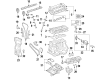
Mazda Bearing Set Part Number: L5Y1-11-SE0
$53.15 MSRP: $70.89You Save: $17.74 (26%)Ships in 1-2 Business DaysProduct Specifications- Other Name: Metal Set, Connecting Rod
Mazda Connecting Rod Bearing Part Number: PEY1-11-SE0
$53.65 MSRP: $71.55You Save: $17.90 (26%)Ships in 1-2 Business DaysProduct Specifications- Other Name: Metal Set, Connecting Rod; Bearing Set, Main Bearing
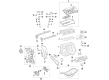
Mazda Connecting Rod Bearing Part Number: PYY1-11-SFX
$61.80 MSRP: $82.41You Save: $20.61 (26%)Ships in 1-2 Business DaysProduct Specifications- Other Name: Metal Set, Connecting Rod; Bearing Set
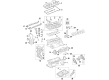
Mazda Bearing Set Part Number: ZYY2-11-SF0
$62.43 MSRP: $83.25You Save: $20.82 (26%)Product Specifications- Other Name: Metal Set, Connecting Rod
Mazda Connecting Rod Bearing Part Number: PYY1-11-SF0
$62.65 MSRP: $83.56You Save: $20.91 (26%)Ships in 1-2 Business DaysProduct Specifications- Other Name: Metal Set, Connecting Rod; Bearing Set
| Page 1 of 3 |Next >
1-20 of 59 Results
Mazda Rod Bearing
The Mazda Rod Bearing supports the crankshaft with a thin oil film cutting friction and keeping engine temperatures stable, providing every driver with smoother revs and longer engine life. Mazda built its reputation on the back of fun, lively rotary motors, innovative Skyactiv technology and the elegant Kodo design language, all focused on combining efficiency and a fun driving spirit. From compact hatchbacks to spirited SUVs, Mazda vehicles share a commitment to light weight, responsive handling and i-Activsense safety features that help build confidence on any road. Continuous research into electric drive and honed all wheel drive systems demonstrate the way Mazda balances being forward thinking tech with the simple enjoyment of driving. Matching that philosophy, the Rod Bearing plays a quiet but critical role throughout the lineup. Built in split halves that snap tightly into the connecting rod and cap, each Rod Bearing contains bi metal or tri metal layers to resist wear, trap debris and endure high rpm loads without scuffing the crank journal. Precise oil hole alignment and tight clearances allow high pressure lubricant to float the crank so that metal never comes in contact with metal and the vibrations remain low. Because the design is applicable to the full range of Mazda engines, owners enjoy confident acceleration, reduced maintenance costs and dependable performance mile after mile.
You'll get great performance and real durability when you pick genuine OEM Rod Bearing. Mazda builds these using high-quality materials and official factory methods to ensure they hold up mile after mile. You deserve that Mazda reliability without the headache of cheap knockoffs. It is easy to find exactly what you need in our huge inventory of genuine parts. Plus, every OEM part carries a real manufacturer's warranty for your peace of mind. You will love our low prices too. Order today and we will ship your brand-new parts fast. They often reach your door in just a few days.
Mazda Rod Bearing Parts and Q&A
- Q:What procedure should be followed after removing the rod bearing along with the connecting rod and piston assemblies on Mazda B2000?A:In case the connecting rod and piston assemblies have been already taken off out of the engine, follow the following process. The connecting rod bearings have a design that makes them slightly project the face of the rod and piston caps to have the positive contact and can be replaced without the removal of the rod and piston assemblies. Stamp the number of the cylinder on the machined parts of the connecting rod and cap with the bottommost journal connecting rod, then take the caps off. Check the journals against roughness and wear; the slight roughness can be smoothed using a fine grit polishing cloth soaked in engine oil, and burrs can be removed using a fine oil stone, and the stone should move around the circumference of the journal, and not back and forth. In case the journals are rated or stippled, then the crankshaft should be changed. Measure the journals of the connecting rod with a micrometer, and check out of roundness and proper size. All crankshaft rod journals will be of standard size but where undersized bearings are being utilized these will be 0.25mm undersized and marked by a stamp on the number 4 counterweight. Plastic gauging material is used by wiping the journal bearing cap, connecting rod and the outer and inner surface of the bearing inserts clean and making sure that the insert tang fits into the notch on the rod and cap. Introduce a strip of plastic gauging material in the center of the lower bearing shell, then clear the bearing cap, and measure the bearing clearances with the help of the width of the flattened plastic gauging material in its maximum width against the graduation on the container, which denotes the clearance, in thousandths of an inch or millimeters. In case the clearance is too much, change the bearing and re-inspect the clearance. There are undersized bearings in 0.25mm, 0.50mm, and 0.75mm. Before installing the bearing, lubricate the bearing with engine oil, and the same should be repeated with the rest of the connecting rod bearings to ensure that all the rods are hooked to their journals when turning the crankshaft without damaging the engine.
- Q:What can be learned from analyzing old rod bearings during engine overhaul, and what factors lead to bearing failure on Mazda Protege?A:When the engine is being overhauled, although new main and connecting rod bearings are supposed to be fitted, the old bearings can be kept so that they can give information on how the engine was. Failure may occur due to ineffective lubrication, dirt or foreign objects, overloading of an engine, and corrosion, among others, which need to be taken care of and never re-occur in time of reassembly. When checking bearings, take them off their respective locations and place them in a clean place so as to match any problem with the crankshaft journal. The foreign particles may enter the engine during assembly, through filters, or machining operation and may be embedded in the material used to make the bearing and any larger particle can score. To avoid such failures, it is necessary to clean all parts of the parts properly and change the oil and filters regularly. Deficiency in lubrication may be attributed to too much heat, overloading, spillage of oil or blocked openings and extreme damage can occur. Driving patterns also influence bearing life; e.g. loading up the engine or taking short journeys may lead to oil shortage and rusting. Poor installation may also cause malfunctioning caused by inadequate space or stagnant debris. In case of worn original bearings or erroneous oil clearances, correct choice of new bearings is very important, particularly when the crankshaft has been regrounded, and then undersized bearings should be fitted. In case of standard size bearings use them as they are and in case of need, get a professional machine shop of engines to vary them. Finally, the most important aspect to be used in choosing the correct bearing sizes is the oil clearance, and a dealer or service department should be used to aid in making sure about uncertainties.
Related Mazda Parts
 Mazda Timing Belt
 Mazda Belt Tensioner
 Mazda Valve Cover Gasket
 Mazda Crankshaft
 Mazda Oil Drain Plug
 Mazda Piston
 Mazda Valve Cover
 Mazda Rocker Arm
 Mazda Cam Gear
 Mazda Crankshaft Timing Gear
 Mazda Oil Pan Gasket
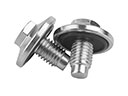 Mazda Transmission Drain Plug
Browse by Model
2 Rod Bearing 3 Rod Bearing 323 Rod Bearing 5 Rod Bearing 6 Rod Bearing 626 Rod Bearing 929 Rod Bearing B2000 Rod Bearing B2200 Rod Bearing B2500 Rod Bearing B2600 Rod Bearing B3000 Rod Bearing B4000 Rod Bearing CX-3 Rod Bearing CX-30 Rod Bearing CX-5 Rod Bearing CX-50 Rod Bearing CX-7 Rod Bearing CX-70 Rod Bearing CX-9 Rod Bearing CX-90 Rod Bearing GLC Rod Bearing Miata Rod Bearing Millenia Rod Bearing MPV Rod Bearing MX-3 Rod Bearing MX-5 Miata Rod Bearing MX-6 Rod Bearing Navajo Rod Bearing Protege Rod Bearing Protege5 Rod Bearing Tribute Rod Bearing