×
- Hello
- Login or Register
- Quick Links
- Live Chat
- Track Order
- Parts Availability
- RMA
- Help Center
- Contact Us
- Shop for
- Mazda Parts

My Garage
My Account
Cart
Genuine Mazda Piston
Engine Pistons- Select Vehicle by Model
- Select Vehicle by VIN
Select Vehicle by Model
orMake
Model
Year
Select Vehicle by VIN
For the most accurate results, select vehicle by your VIN (Vehicle Identification Number).
46 Pistons found
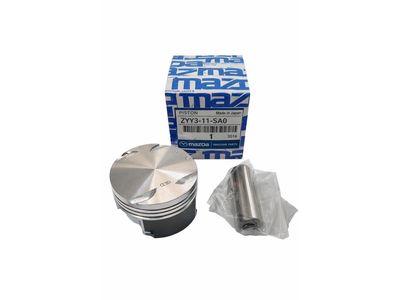
Mazda Piston Part Number: ZYY3-11-SA0
$56.10 MSRP: $74.82You Save: $18.72 (26%)Product Specifications- Other Name: Piston Set
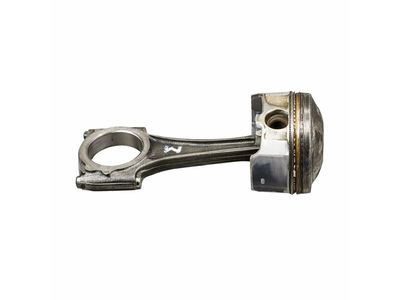
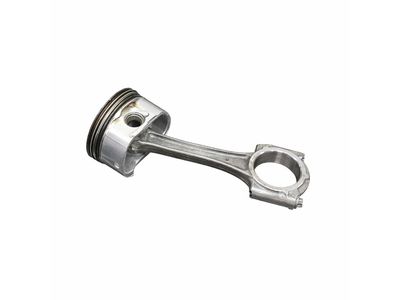
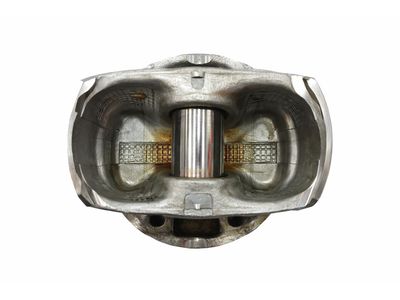
Mazda Piston Part Number: PYY4-11-SA0
$68.60 MSRP: $91.49You Save: $22.89 (26%)Ships in 1-2 Business DaysProduct Specifications- Other Name: Piston Set
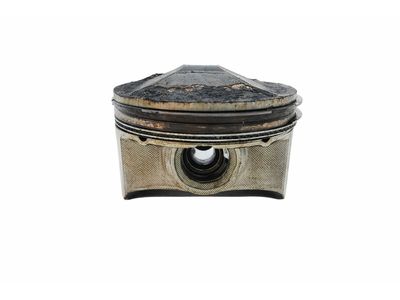
Mazda Piston Part Number: PEY3-11-SA0A
$98.75 MSRP: $131.69You Save: $32.94 (26%)Ships in 1-2 Business DaysProduct Specifications- Other Name: Piston Set
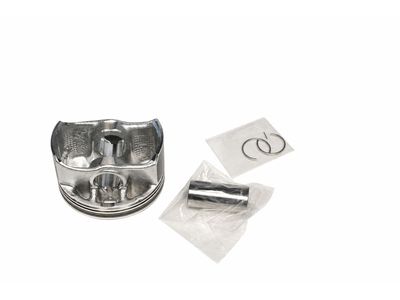
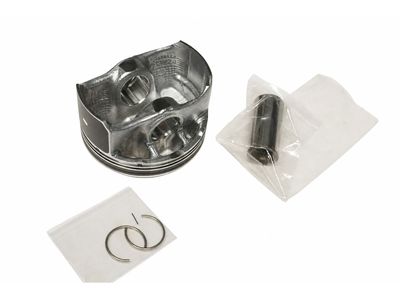
Mazda Piston Part Number: PEY9-11-SA0
$103.13 MSRP: $137.52You Save: $34.39 (26%)Ships in 1-2 Business DaysProduct Specifications- Other Name: Piston Set

Mazda Piston & Pin Assembly Part Number: 1F61-23-200
$35.53 MSRP: $47.37You Save: $11.84 (25%)Ships in 1-2 Business DaysProduct Specifications- Other Name: Piston Set
Mazda Piston & Pin Assembly Part Number: 1F63-23-200
$44.38 MSRP: $59.18You Save: $14.80 (26%)Ships in 1-2 Business DaysProduct Specifications- Other Name: Piston Set
Mazda Pistons Part Number: ZZCA-11-100
$47.20 MSRP: $62.94You Save: $15.74 (26%)Product Specifications- Other Name: Piston Set; Piston
- Replaced by: ZZCB-23-200
Mazda Piston & Pin Assembly Part Number: 1F62-23-200
$48.59 MSRP: $64.80You Save: $16.21 (26%)Ships in 1-2 Business DaysProduct Specifications- Other Name: Piston Set
Mazda Piston Part Number: PYY3-11-SA0
$70.28 MSRP: $93.71You Save: $23.43 (25%)Ships in 1-2 Business DaysProduct Specifications- Other Name: Piston Set (1 Piston)
Mazda Piston Part Number: PEY6-11-SA0
$82.38 MSRP: $109.86You Save: $27.48 (26%)Ships in 1-2 Business DaysProduct Specifications- Other Name: Piston Set
- Replaces: PEY2-11-SA0A
Mazda Piston Part Number: PYY5-11-SA0
$85.86 MSRP: $114.51You Save: $28.65 (26%)Ships in 1-2 Business DaysProduct Specifications- Other Name: Piston Set
Mazda Piston Part Number: FPY1-11-SA0E
$86.38 MSRP: $115.19You Save: $28.81 (26%)Ships in 1-2 Business DaysProduct Specifications- Other Name: Piston Set
Mazda Piston Part Number: BPZ0-11-SA0
$91.53 MSRP: $122.05You Save: $30.52 (26%)Ships in 1-2 Business DaysProduct Specifications- Other Name: Piston Set
Mazda Piston Part Number: BPY1-11-SA0A
$92.50 MSRP: $123.35You Save: $30.85 (26%)Ships in 1-2 Business DaysProduct Specifications- Other Name: Piston Set
Mazda Piston Part Number: B6Z2-11-SA0C
$92.50 MSRP: $123.35You Save: $30.85 (26%)Ships in 1-2 Business Days
Mazda Piston Part Number: PEY1-11-SA0C
$103.14 MSRP: $137.54You Save: $34.40 (26%)Ships in 1-2 Business DaysProduct Specifications- Other Name: Piston Set
Mazda Piston Part Number: PYY6-11-SA0
$108.06 MSRP: $144.10You Save: $36.04 (26%)Ships in 1-2 Business DaysProduct Specifications- Other Name: Piston Set
Mazda Piston Part Number: L3Y4-11-SA0
$111.89 MSRP: $149.22You Save: $37.33 (26%)Ships in 1-2 Business DaysProduct Specifications- Other Name: Piston Set
Mazda Piston Part Number: F220-11-SA0
Product Specifications- Other Name: Piston Set
Mazda Piston Part Number: L3Y0-11-SA0
Product Specifications- Other Name: Piston Set
| Page 1 of 3 |Next >
1-20 of 46 Results
Mazda Piston
Mazda Piston turns fiery fuel into smooth rotary power that launches every vehicle in the lineup in eager response, delivering drivers with instant power and signature zoomy feel. Mazda has made a name for itself with spirited handling, efficient Skyactiv engines, sculpted Kodo styling and helpful i-Activsense safety tech wrapped in cars that are spirited but also practical for daily life. The brand plays with electric and hybrid systems and its i-Activ AWD displays confident traction on twisting or rough roads, but Mazda keeps steering feedback crisp so that commutes remain fun. Inside, cabins combine obvious controls with quality materials to demonstrate that joy and comfort behind the wheel don't have to be mutually exclusive. At the center of that excitement is the robust Mazda Piston, which is made of lightweight aluminum alloy to move fast but stay cool thanks to targeted oil jets, with tight rings holding combustion pressure in place to make the optimal of thrust. Each Mazda Piston takes a precise path up and down the cylinder, sending that energy through the connecting rod to turn the crankshaft with very little vibration. By reducing the mass of the skirt and the slipper profile, this component contributes to the free rev-ability and fuel consumption reduction and emission reduction of the engine, which is a benefit that is felt in all types of cars from hatchbacks to sedans and SUVs, and all Mazdas will be able to deliver lasting performance and efficiency.
You'll get great performance and real durability when you pick genuine OEM Piston. Mazda builds these using high-quality materials and official factory methods to ensure they hold up mile after mile. You deserve that Mazda reliability without the headache of cheap knockoffs. It is easy to find exactly what you need in our huge inventory of genuine parts. Plus, every OEM part carries a real manufacturer's warranty for your peace of mind. You will love our low prices too. Order today and we will ship your brand-new parts fast. They often reach your door in just a few days.
Mazda Piston Parts and Q&A
- Q:What steps should be taken before installing the piston and connecting rod assemblies on Mazda MPV?A:Prior to the installation of the piston and connected rod assembly, the walls of the cylinder must be clean, the top edge of each cylinder chamfered and the crankshaft installed. Put off the number one connecting rod on which remove the cap, taking care to record the marks on its removal, clean the bearing surfaces with a lint-free cloth. One should not touch the new bearing inserts using fingers to avoid contamination. Clean the reverse side of the new bearing insert (upper) and put it in the connecting rod, taking great care to ensure that the tab fits in the recess with no hammering. Do the same with the lower bearing insert in the rod cap, but be sure that it is clean and without lubricant. Install the piston ring slits around the piston, run a hose over each connecting rod cap bolt, slick the piston and rings with clean engine oil, and lock a piston ring compressor on leaving the skirt jutting. Turn the crankshaft until the number one connecting rod journal is at bottom dead center and spray engine oil on the cylinder walls. Be sure to place the piston/connecting rod assembly into the cylinder bore with the mark located on the piston facing the front of the engine making certain that the ring compressor is in place. Tap the piston into the cylinder carefully, whilst directing the connecting rod to the crankshaft journal, but taking care not to meet a resistance. Checking with Plastigage, the clearance between the connecting rod and the bearers must not be over 1.0 mm and the bearing faces must be clean before applying a coating of grease and then replacing the rod cap and tightening the nuts in three steps. Proceed with the rest of the assemblies, preserving the bearing inserts and connecting rods clean, and making sure that the right assembly in each cylinder is made, and that the cylinder walls and bearing faces are lubricated. Once all the assemblies are in place, turn the crankshaft to ensure that there is no binding and also measure the connecting rod end play and make sure that it is within the specification. In case of adjustments, the rods can be resized at a machine shop of automotive.
- Q:What steps must be taken before removing the piston and connecting rod assemblies on Mazda Protege?A:The cylinder head(s), the oil pan and the oil pump pick-up tube have to be removed before the removal of the piston and the connecting rod assemblies. First examine with your fingernail the existence of a ridge at the upper extreme of the travel of the ring, which is only about 1/4-inch below the top of any cylinder. In case of ridges they should be absolutely cleared using a ridge reamer before trying to disassemble the pistons otherwise they will be damaged. After clearing the ridges, invert the engine, that is, with the crankshaft upwards. Prior to removing connecting rods, verify the end play with feelers, and make sure that they slide freely between the first connecting rod and the crankshaft throw. When the endplay is greater than the given limit then new connecting rods might be needed and when new rods or a crankshaft is fitted, machining might be needed to achieve the appropriate endplay. Identify the connecting rod and caps; in case they are not marked, they should be marked with a center punch. Relax the connecting rod cap nuts one at a time until they can be removed manually, and remove the number one connecting rod cap and bearing insert without dropping the bearing insert. In order to cushion the crankshaft journal and cylinder wall when the piston is removed, slip a short length of plastic or rubber hose over each connecting rod cap bolt. Take off the bearing insert and drive the connecting rod/piston assembly out of the engine by pushing the top of the bearing with a wooden hammer handle. When resistance is experienced, make sure all the ridge is removed. Continue with the same procedure on the rest of the cylinders, turning the crankshaft as necessary so that the rod fits into the cylinder bore. Once removed, reintroduce the connecting rod caps and bearing inserts in each of the respective rods, and ensure the cap nuts or bolts are finger tight to avoid inadvertent injury to the bearing surfaces. The pistons should not be disconnected with the connecting rods.
Related Mazda Parts
 Mazda Engine Cover
 Mazda Oil Filter Housing
 Mazda Oil Pump
 Mazda Valve Stem Seal
 Mazda Cam Gear
 Mazda Camshaft Thrust Plate
 Mazda Oil Filter Gasket
 Mazda Oil Pan Baffle
 Mazda Piston Ring Set
 Mazda Timing Belt Idler Pulley
 Mazda Timing Chain Guide
 Mazda Timing Cover Gasket
Browse by Model
2 Piston 3 Piston 323 Piston 5 Piston 6 Piston 626 Piston B2200 Piston B2600 Piston B3000 Piston B4000 Piston CX-3 Piston CX-30 Piston CX-5 Piston CX-50 Piston CX-7 Piston CX-70 Piston CX-9 Piston CX-90 Piston Miata Piston Millenia Piston MPV Piston MX-5 Miata Piston MX-6 Piston Protege Piston Protege5 Piston Tribute Piston