×
- Hello
- Login or Register
- Quick Links
- Live Chat
- Track Order
- Parts Availability
- RMA
- Help Center
- Contact Us
- Shop for
- Mazda Parts

My Garage
My Account
Cart
Genuine Mazda CV Joint Boot
Constant-Velocity Joint Boot- Select Vehicle by Model
- Select Vehicle by VIN
Select Vehicle by Model
orMake
Model
Year
Select Vehicle by VIN
For the most accurate results, select vehicle by your VIN (Vehicle Identification Number).
136 CV Joint Boots found
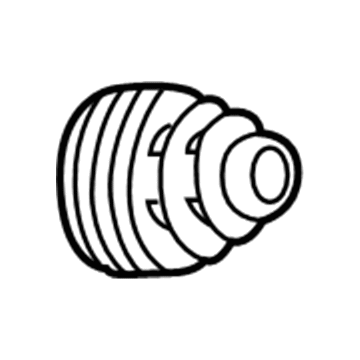
Mazda Inner Boot Part Number: GD42-22-540
$31.99 MSRP: $42.65You Save: $10.66 (25%)Ships in 1-2 Business DaysProduct Specifications- Other Name: Boot Set, Inner Joint
- Position: Inner
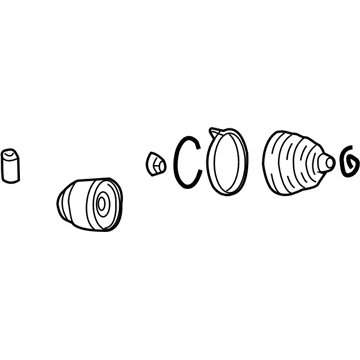
Mazda Inner Boot Part Number: GG31-22-540
$34.11 MSRP: $45.50You Save: $11.39 (26%)Ships in 1-2 Business DaysProduct Specifications- Other Name: Boot Set, Inner Joint
- Position: Inner
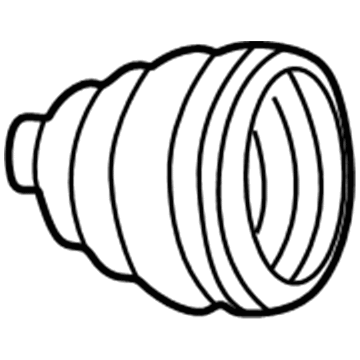
Mazda Boots Part Number: G567-22-530
$34.35 MSRP: $45.81You Save: $11.46 (26%)Ships in 1-2 Business DaysProduct Specifications- Other Name: Boot, Outer Joint; Boot, Outer Boot
- Replaces: G567-22-530-9U, G565-22-530B, GG85-22-530, G565-22-530A
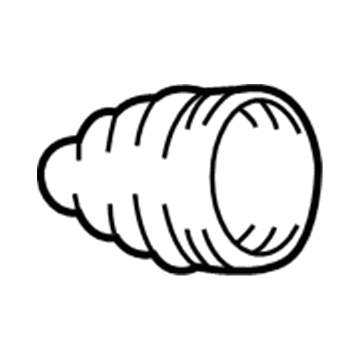
Mazda Outer Boot Part Number: GP04-22-530A
$34.54 MSRP: $46.06You Save: $11.52 (26%)Ships in 1-2 Business DaysProduct Specifications- Other Name: Boot Set, Outer Joint
- Position: Outer
- Replaces: GP04-22-530, GPY4-22-530
Mazda Outer Boot Part Number: GD42-22-530A
$34.78 MSRP: $46.38You Save: $11.60 (26%)Ships in 1-2 Business DaysProduct Specifications- Other Name: Boot Set, Outer Joint
- Position: Outer
- Replaces: GD42-22-530, GDY2-22-530
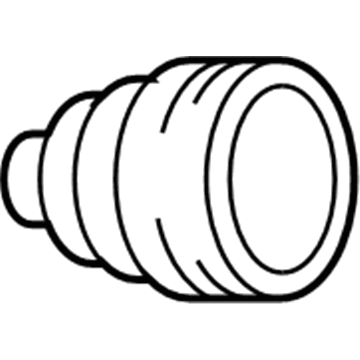
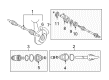
Mazda Outer Boot Part Number: GP02-22-530A
$36.54 MSRP: $48.72You Save: $12.18 (25%)Ships in 1-2 Business DaysProduct Specifications- Other Name: Boot Set, Outer Joint
- Position: Outer
- Replaces: GP02-22-530, GPY2-22-530
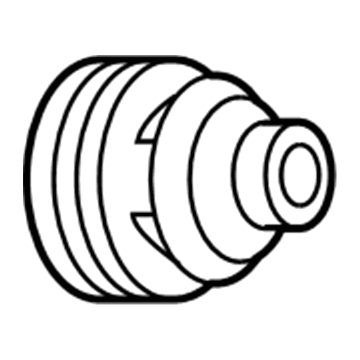
Mazda Inner Boot Part Number: GP02-22-540
$36.56 MSRP: $48.76You Save: $12.20 (26%)Ships in 1-2 Business DaysProduct Specifications- Other Name: Boot Set, Inner Joint
- Position: Inner
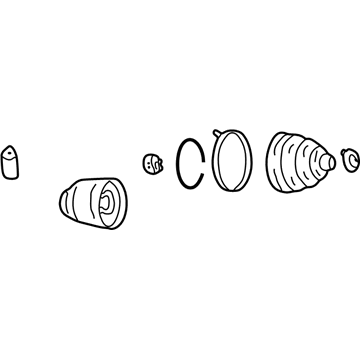
Mazda Inner Boot Part Number: GG05-22-540
$37.99 MSRP: $50.66You Save: $12.67 (26%)Ships in 1-2 Business DaysProduct Specifications- Other Name: Boot Set, Inner Joint
- Position: Inner
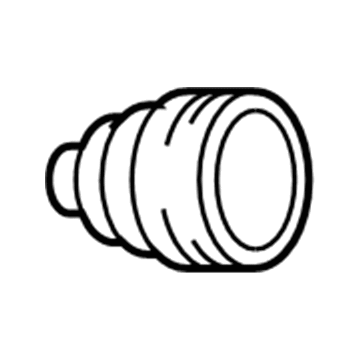
Mazda Outer Boot Part Number: GP40-22-530
$137.33 MSRP: $183.13You Save: $45.80 (26%)Ships in 1-2 Business DaysProduct Specifications- Other Name: Boot Set, Outer Joint
- Position: Outer
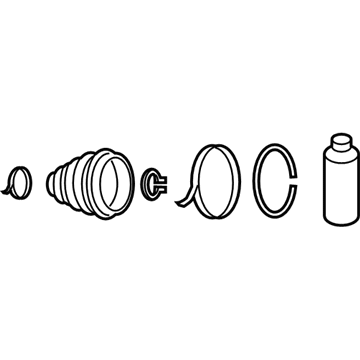
Mazda Inner Boot Part Number: FTC3-22-540
$48.63 MSRP: $64.84You Save: $16.21 (25%)Ships in 1-2 Business DaysProduct Specifications- Other Name: Boot Set, Inner Joint
- Position: Inner
Mazda Inner Boot Part Number: FTC4-22-540
$48.63 MSRP: $64.84You Save: $16.21 (25%)Ships in 1-2 Business DaysProduct Specifications- Other Name: Boot Set, Inner Joint
- Position: Inner
Mazda Inner Boot Part Number: GDB7-22-540
$48.63 MSRP: $64.84You Save: $16.21 (25%)Ships in 1-2 Business DaysProduct Specifications- Other Name: Boot Set, Inner Joint
- Position: Inner
Mazda Inner Boot Part Number: GG36-22-540
$46.31 MSRP: $61.76You Save: $15.45 (26%)Ships in 1-2 Business DaysProduct Specifications- Other Name: Boot Set, Inner Joint
- Position: Inner
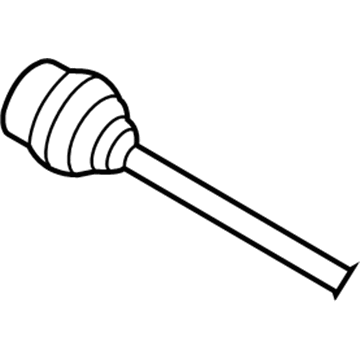
Mazda Boots Part Number: GD68-22-540
$45.54 MSRP: $60.73You Save: $15.19 (26%)Ships in 1-2 Business DaysProduct Specifications- Other Name: Boot Set, Inner Joint; Boot, Inner Boot
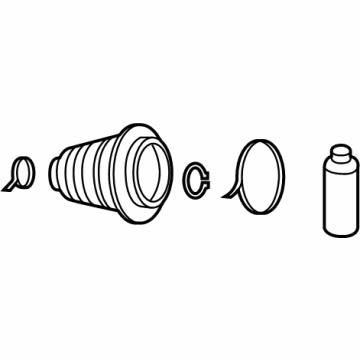
Mazda Inner Boot Part Number: RD03-22-540
$46.61 MSRP: $62.16You Save: $15.55 (26%)Ships in 1-2 Business DaysProduct Specifications- Other Name: Boot Set, Inner Joint; Inner CV Joint Boot
- Position: Inner
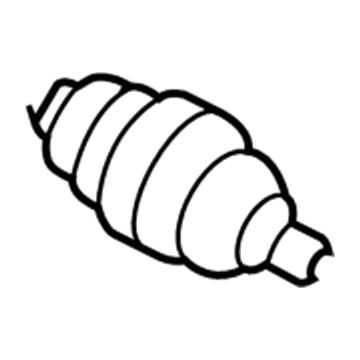
Mazda Boots Part Number: MA01-22-530
$48.15 MSRP: $64.20You Save: $16.05 (25%)Ships in 1-2 Business DaysProduct Specifications- Other Name: Boot Set, Outer Joint; Boot, Outer Boot
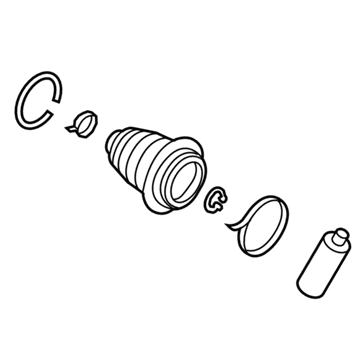
Mazda Boots Part Number: RDB1-22-540
$51.30 MSRP: $68.42You Save: $17.12 (26%)Ships in 1-2 Business DaysProduct Specifications- Other Name: Boot Set, Inner Joint; Boot, Boot Kit, Inner Boot
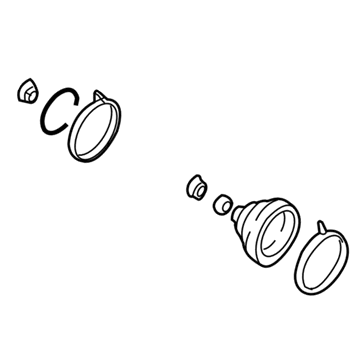
Mazda Outer Boot Part Number: GG03-22-530
$49.70 MSRP: $66.28You Save: $16.58 (26%)Ships in 1-2 Business DaysProduct Specifications- Other Name: Boot Set, Outer Joint
- Position: Outer
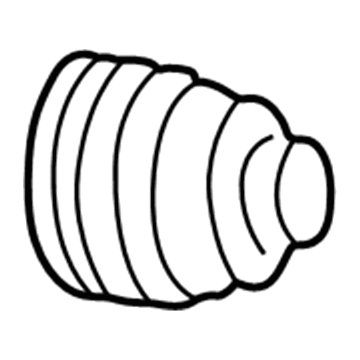
Mazda Boots Part Number: F015-22-540
$54.43 MSRP: $72.58You Save: $18.15 (26%)Ships in 1-2 Business DaysProduct Specifications- Other Name: Boot Set, Inner Joint; Boot, Inner Boot
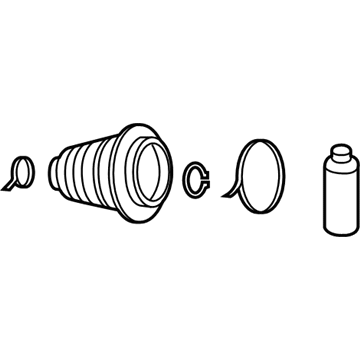
Mazda Boots Part Number: RTA1-22-540
$56.13 MSRP: $74.86You Save: $18.73 (26%)Ships in 1-2 Business DaysProduct Specifications- Other Name: Boot Set, Inner Joint; Boot, Inner Boot
| Page 1 of 7 |Next >
1-20 of 136 Results
Mazda CV Joint Boot
Mazda CV Joint Boot keeps grease sealed and road grit out to provide a smooth power supply to every front wheel while the axle flexes during turns and bumps. Founded in Japan, Mazda is well known for its breakthrough rotary engine and builds cars and SUVs that combine lively handling with everyday efficiency. Mazda takes this combination to the next level with Skyactiv engines and transmissions that sip fuel without sacrificing performance while its Kodo design language gives each model a sculpted, motion-filled presence that draws the gaze in traffic. Safety is also important, so Mazda comes with features such as lane-keep assist and radar cruise on i-Activsense, or the brand tinkers around with electric drive, mild hybrids, and i-Activ AWD to be prepared for any road. Just as these innovations ensure passenger safety and enhance driving bliss, the CV Joint Boot guards a vital mechanical connection. The CV Joint Boot is a tough but flexible cover that wraps around the constant velocity joint and traps the special lubricant around polished bearings and prevents water, sand, and chemicals from potentially scarring them. Rubber versions stay supple through winter, while thermoplastic versions are resilient to heat and maintain their shape at highway speed, but both permit free articulation of the axle due to accordion ribs. Replacing a worn boot early prevents costly joint damage and maintains the quiet, responsive feel drivers have come to expect from every Mazda.
You'll get great performance and real durability when you pick genuine OEM CV Joint Boot. Mazda builds these using high-quality materials and official factory methods to ensure they hold up mile after mile. You deserve that Mazda reliability without the headache of cheap knockoffs. It is easy to find exactly what you need in our huge inventory of genuine parts. Plus, every OEM part carries a real manufacturer's warranty for your peace of mind. You will love our low prices too. Order today and we will ship your brand-new parts fast. They often reach your door in just a few days.
Mazda CV Joint Boot Parts and Q&A
- Q: How to check the condition of CV Joint Boot and suspension components on Mazda 3?A:To observe the steering and suspension parts in detail, refer to the shock absorbers by parking the vehicle on a flat surface, disabling the engine, and making sure the parking brake is in place while checking tire pressures. Press down on one side of the vehicle and release it; the body should cease bouncing and return to a level state in one or two bounces. If it still moves or does not resume its initial position, it is probable that there is a worn or weak shock absorber. Check this at the other corners. Lift the car and place it firmly on jack stands, and examine the shock absorbers; a bit of a light film is fine, but any serious leakage of fluid should lead to a replacement of the shocks as a set. Make sure that the shocks are well mounted and intact, and examine upper mounts to find out whether they are damaged or worn out, which requires replacement as a system too. The second step is to check the tires for abnormal wear marks and correct inflation, the universal joint used between the steering shaft and the gear housing for leakage of lubricants, and finally make sure that the dust boots are still in place with clamps fastened. Check tie rod ends for excessive play and search for dislocated bolts, worn parts, or rotting rubber bushings on all suspension and steering parts. When the assistant is rotating the steering wheel, monitor the steering parts to see whether they are free moving or bound. The wear of the ball joints can be measured by trying to raise and lower each control arm using a pry bar; any movement is an indication of a worn ball joint, and the control arm will have to be replaced due to the non-removable nature of the ball joints. Check ball joint boots and tie-rod end boots to see whether they are damaged and seeping grease. Lastly, verify the CV Joint Boots that play an important part in preventing dirt and foreign material from destroying the constant velocity joints. Clean and check these boots regularly for tears, cracks, and loose clamps, and replace them in case there is any sign of wear or leaking lubricant.
- Q: How to inspect the CV Joint Boot and check the steering and suspension components on Mazda 6?A:To test the shock absorbers, one should park the car on flat surfaces, shut down the engine and place a parking reserve, and tyre pressures should be checked. Stomp on one end in the vehicle and loosen it and watch what happens with the body; it should halt in one or two bounces. In case it is still in motion or fails to resume its initial position, then there could be a worn or poor shock absorber. Check at these other corners again. Lift the car and place it on jackstands and check the shock absorbers to ensure there is no leakage of fluid, but a light coating is not a problem and an excessive amount of fluid must also make the shocks have to be replaced as a set. Make sure the shocks have been completely mounted and are not damaged, inspecting them in all places, and also inspecting the upper mounts, which also require replacement as a set in the event of damage and wear. With regards to the steering and suspension, inspect the tires on irregular wear and proper air inflation, look at the universal joint and steering gear housing as to leakage of lubricants and make sure that dust boots are present. Check tie-rod ends of excessive play and examine loose bolts or damaged parts. As an assistant turns the steering wheel, check on the steering parts to ensure that they move freely. To test balljoints, pry the control arms in an up and down motion to determine whether there is any play and in that case, the balljoints should be replaced. Check balljoint boots to be of good shape and look at the back of the boots to ensure the bushings of the suspension arms are not worn out. Finally, examine the CV Joint Boots for tears, cracks, and loose clamps, bending them with the hand to determine the existence of the cracks or grease leaks, since the signs of any damages prove that they need to be replaced to ensure that the constant velocity joints will not be exposed to dirt and moisture.
Related Mazda Parts
 Mazda Control Arm Bushing
 Mazda Engine Control Module
 Mazda Piston
 Mazda Battery Trays
 Mazda Camber and Alignment Kit
 Mazda Crankshaft Seal
 Mazda Differential Bearing
 Mazda Door Check
 Mazda Door Lock Cylinder
 Mazda Harmonic Balancer
 Mazda Light Control Module
 Mazda Trunk Lid Latch
Browse by Model
2 CV Joint Boot 3 CV Joint Boot 323 CV Joint Boot 5 CV Joint Boot 6 CV Joint Boot 626 CV Joint Boot 929 CV Joint Boot B2000 CV Joint Boot B2200 CV Joint Boot B2600 CV Joint Boot CX-3 CV Joint Boot CX-30 CV Joint Boot CX-5 CV Joint Boot CX-50 CV Joint Boot CX-7 CV Joint Boot CX-9 CV Joint Boot Millenia CV Joint Boot MPV CV Joint Boot MX-3 CV Joint Boot MX-30 EV CV Joint Boot MX-5 Miata CV Joint Boot MX-6 CV Joint Boot Protege CV Joint Boot Protege5 CV Joint Boot RX-7 CV Joint Boot RX-8 CV Joint Boot Tribute CV Joint Boot